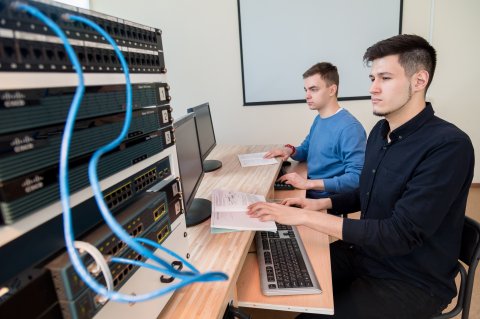
Рубрика: Без рубрики

  • World-class Education: EECS SUSU Launches an English-taught Bachelor’s Degree Program in IT

    World-class Education: EECS SUSU Launches an English-taught Bachelor’s Degree Program in IT

    A unique Informatics and Computer Science Bachelor’s degree program have been opened within the Fundamental Computer Science and Information Technology. An excellent grasp of the English language, data collection methods, software development and operation research methods will make these students the most in-demand specialists on the job market.

    Further information, including the structure of the educational program, can be found on the program description page: https://eecs.susu.ru/en/future-students/bachelor-degrees/ (далее…)

  • We are among the best: SUSU is among the best universities in the world in computer and engineering sciences!

    We are among the best: SUSU is among the best universities in the world in computer and engineering sciences!


    Times Higher Education international rankings agency has published the results of the THE World University Rankings by subject 2021.

    This year, South Ural State University has been included into three rankings by subject at once according to the THE. For the second year, the university has been included in the THE Engineering & Technology ranking by subject, where it has improved its position and is located in the 501-600 interval group of more than 900 world universities training specialists in the field of automation and control systems, construction, electrical engineering, power engineering, metallurgy, mechanical engineering, etc.

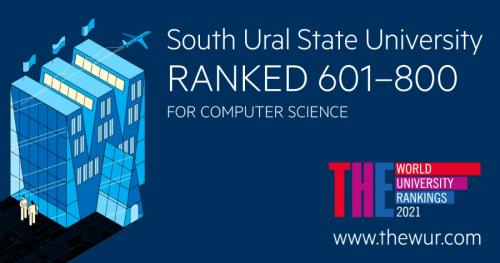
    This year SUSU has expanded the list of rankings by subject and, for the first time, it has been included in the THE Computer Science ranking, where it took the position 601-800. This ranking by subject assesses universities in a fairly wide and promising area, including both theoretical and applied scientific areas, including information systems, computer networks and communications, artificial intelligence, computer vision and pattern recognition, as well as a number of others.

    Congratulations to the staff and students of EECS SUSU! Together we are making possible something that previously seemed to be unreachable!

    https://www.susu.ru/en/news/2020/10/29/listed-times-higher-education-ranking-subject-three-categories

  • World-class Education: EECS SUSU Launches an English-language Bachelor’s Degree Programme in IT

    World-class Education: EECS SUSU Launches an English-language Bachelor’s Degree Programme in IT

    A unique Communication Technologies and Intelligent Data Processing Bachelor’s degree programme have been opened within the Infocommunication Technologies and Systems of Communication. An excellent grasp of the English language, data collection methods, transfer and intelligent processing of data will make these students the most in-demand specialists on the job market.

    Further information, including the structure of the educational programme, can be found on the programme description page: https://eecs.susu.ru/en/future-students/bachelor-degrees/ (далее…)

  • “Global Game Jam” Winners of Programming Competition Announced at SUSU

    “Global Game Jam” Winners of Programming Competition Announced at SUSU

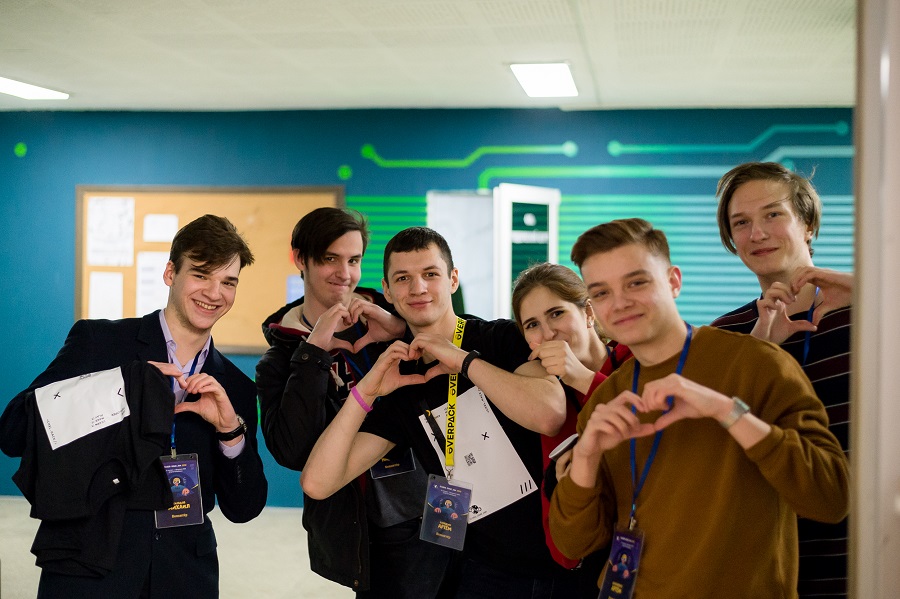
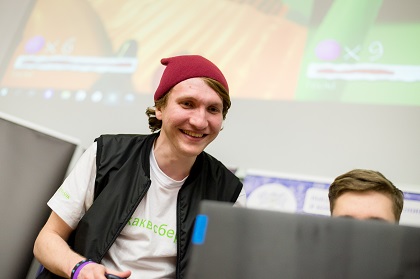
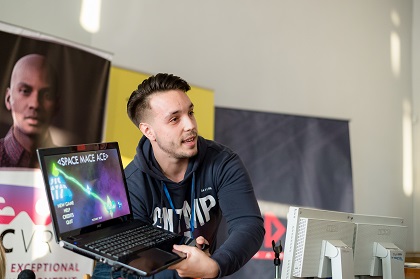
    The Global Game Jam, a video game development competition, was held at the SUSU School of Electronic Engineering and Computer Science January 31st through February 1st. The major worldwide contest was organized at SUSU for the seventh time already.

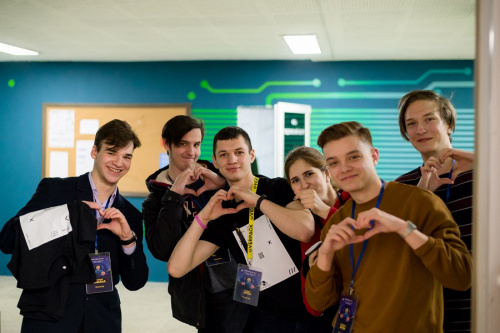
    Participating in the Global Game Jam is the best way to start designing games, meet some like-minded people, and fulfil your experimental ideas. This year, South Ural State University has gathered more than 100 participants, 44 of whom are SUSU students.

    During the first day of the event, an opening ceremony took place. The Global Game Jam participants were given 48 hours to team up and create a game from scratch simultaneously with more than 20 thousand programmers and those, who simply love computer games, from dozens of countries.

    “The Global Game Jam is always a really special event that is held in an exciting and fascinating way each year. This event attracts a lot of people, including designers, artists, musicians, scriptwriters and representatives of many other professions. I hope that all the Global Game Jam participants will have great fun while participating in it and we, in our turn, will do our best to spark desire to create something new in their hearts,” says Gleb Radchenko, Director of the SUSU School of Electronic Engineering and Computer Science.

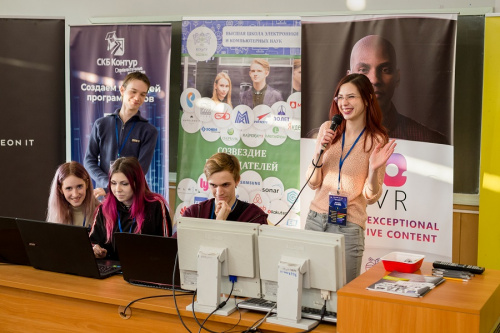
    Each year, the biggest IT companies and universities of the world act as the sponsors and organizers of the Global Game Jam: Epic Games, Facebook, Valve, MIT, California Polytechnic University. This year’s sponsors of the event at SUSU are well-known IT companies from Chelyabinsk and Ekaterinburg: SKB Kontur, TAPCLAP, ChelHack, ICVR, Napoleon IT, Duck Rockets and ODIN Games.

    “Each year, students are creating unusual games. They can approach the tasks from different angles thinking outside of the box. This year, after we see the results of their works, we would like to invite the students to take internships,” says Aleksey Pomazkin, Producer of the Odin Games mobile games design company.

    During the second day of the competition, the participants were working on the technical pattern of a game all day long. They drew illustrations and graphics for the games, wrote music, created scripts and programmed.

    The organisers set a new common topic for every participant of the Global Game Jam all around the world each year. This time, the competition theme was the “Repair”. So, the participants would have to create a video game according to the topic within 48 hours.

    “The Global Game Jam committee, which is located in America, sets the theme of the competition. Each time, they are trying to choose a topic that can be interpreted differently. For us, the word “repair” implies “renovation”, “development”, “restoration”, “reunion” and more. Thus, a team can create a game in its own manner, depending on their own understanding of this word,” says Ivan Volkov, organiser of the events at SUSU.

    The specific features of the contest are the diversifiers, i.e. secondary topics that can be used while designing video games. Using such diversifiers, the participants get an opportunity to distinguish their game from the slew of other created games, and consequently increase their chances for winning.

    Maksim Batyatin, a 2-nd year student of the SUSU School of Electronic Engineering and Computer Science, took part in the Global Game Jam for the third time and decided to make things more unusual and complex.

    “I’m really into programming and this year I’m participating in two projects at once, namely I’m creating a game with my team and also my own one. For the second game I am using various programs which are not usually used. This will be a mobile game, where a phone is a joystick. For me, it is not about the winning, it is about participating.”

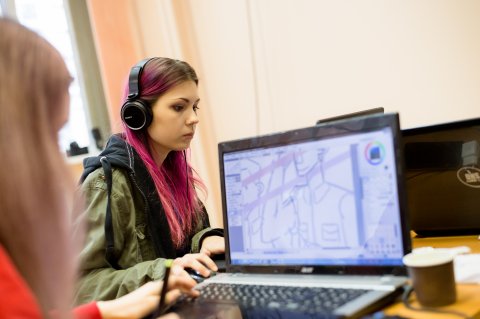
    Not only young men but also young women actively engage themselves in the competition. One of them is Antonina Sharifulina, a Master’s student of the SUSU Institute of Architecture and Construction. She studies design and, in a year and a half, her graduation qualifying paper will be on computer game design. Antonina decided to take part in the Global Game Jam to gain experience and show her abilities in design.

    “This is my first time participating in a video game competition. I do not consider this contest hard, since in the team I am responsible for the visual part and I enjoy doing it. My team and I are creating a game about a wrecked ship that needs to be restored. I really hope our work will be appreciated and we will take the first place.”

    Students from other universities also take part in the Global Game Jam video game design contest at SUSU. Thus, Dmitry Butov, a 3-rd year student majoring in the Software Engineering programme at Chelyabinsk State University, participates for the second time. Last year, his team won the Audience Choice Award. This year, the students want to get the most out of the competition.

    “Such events give me great experience in the field of software development. I like the idea of the participants having no boundaries in terms of choosing the tools for creating games. My friends and I, a team of three people, are designing a game on a simple platform. After the main part is ready, we will try to make it more difficult using different diversifiers.”

    During the final day of the event, the participants presented 29 video games to the jury. Each team managed to design a complete game only within 48 hours. Each game was unique, filled with various characters, tasks, and, the most important, corresponded with the theme. The organizing committee highlighted the fact that this year all the games were created at a top-level.

    According to the results of the contest, the most creative and talented among the 29 teams were distinguished. The sponsors of the event, as well as the representatives of the biggest IT companies of the region awarded these teams presents, and some of them were invited to take the internship. The list of the best teams can be found here. Also, the School of Electronic Engineering and Computer Science awarded certificates to the participants.

    “Each year, the works greatly differ from each other. This year, for example, several games at once have been made available for the audience right after the demonstration. All those present had an opportunity to connect to the platform online and become the very first players. Also, there is a big number of 3D projects this year. That is because the technologies for developing 3D games do not require as much effort as before. Now they became much easier and allowed to create high-quality projects. I think the most important thing about the Global Game Jam lies in the sense of unity that brings together tens of thousands of developers around the world, with whom you design unique things,” sums up the results of the contest Gleb Rachenko, Director of the School of Electronic Engineering and Computer Science.

    One of the participants of the competition was Nail Khaidarov, a graduate student of the SUSU Institute of Architecture and Construction, who shared his emotions.

    “Most of all, this contest will be remembered for the cheerful and friendly atmosphere in the team. From generating the ideas to developing and presenting the games, we had great fun. Participating in such events provides students with opportunities to meet new people with similar interests, check what you are capable of, boost your skills in speed of work and communication in a team, understand your strong and weak spots. It is a real shakeup when you completely disconnect from the outside world for 48 hours and do what you love and what you are best at, working shoulder to shoulder with the like-minded people.”

    The game “BIG RED BUTTON” by the Аleksandr Fedyashev’s team became the best project according to the TapClap sponsor. The participant noted that the Global Game Jam is neither a competition nor a contest. It is more about collaboration and unity. Aleksandr thinks it is really important to position such events properly in order to form correct idea and expectations.

    “This is my third time in the Global Game Jam. The most remarkable moments, as usual, were the incredible atmosphere and, of course, the team. During the Jam, there is nothing but you and the game, on which you are working together with your team. That is why most of the memories and emotions are all about that. The opening and closing ceremonies are also quite exciting and pleasant, especially for the participants.
    Everyone gets not only a positive charge and great atmosphere. For me, as a game designer, participation in the Global Game Jam gives a unique opportunity to boost my communication, design and team work skills, meet new people and get a load positive emotions over a short period of time.”

    During the closing ceremony, all the participants were awarded certificates of participation and T-shirts from the ChelHack sponsor.

    The Global Game Jam is a perfect way to learn how to develop video games, since both newbies and professionals can participate in it; and all the games of the past years, as well as their source codes are available on the GGJ official web site.

    The games developed this year were also uploaded to the Global Game Jam web site with an open source code. This means that everyone can see how the game was created and even try to elaborate it. List of games can be found here. 

    Marina Kovyazina, photo by Oleg Igoshin

  • “How to Magnify Movement and Identify Photosensor Imprints”: Lectures by Professor Omar Fahmi Held at SUSU

    “How to Magnify Movement and Identify Photosensor Imprints”: Lectures by Professor Omar Fahmi Held at SUSU

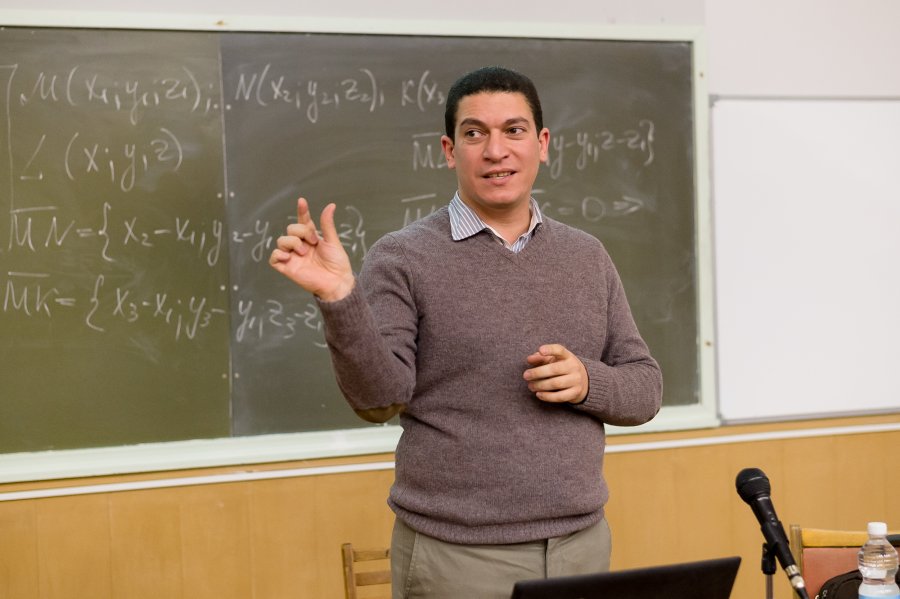
    Professor Omar Fahmi, Associate Professor of Future University, Egypt, senior research fellow of the SUSU Department of Electronic Computing Machines, has been delivering lectures at the SUSU School of Electronic Engineering and Computer Science this week.

    Omar Fahmi is an Associate Professor of the Department of Electrical Engineering of Future University in Egypt. In 2012 he was awarded PhD in Information and Communications Technologies. His field of study is the image processing, computer vision and their application. He has been engaged in the research of video processing and the magnification of moving objects in digital video in particular. He has been working at multimedia forensics and the problem of detecting fakes based on the individual characteristics of the camera and increasing the degree of resolution for images.

    In SUSU he delivered two lectures: on Micromovement Magnification Techniques, and on Forensic Image Analysis. In the first lecture he spoke about magnification techniques for natural-video micromovements, which cannot be detected by the human eye. For example, a video of a sleeping child was demonstrated at the lecture before it was processed. The audience was not able to see any movements, and after its processing the active movement of the chest became visible. This magnification is possible thanks to four methods proposed by the professor: controlled pyramidal techniques, phase changing with Hilbert transformations, the Riesz pyramid method and the double tree-type method of complex wavelet transform.

    “There are various applications for such technologies, for example, in medicine. Imagine that you are able to evaluate the ECG of people’s hearts with the help of cell phones. Or one will be able to see the engine detonation when designing a new car; in mechatronics engineering it will be possible to take into consideration the factors of engine vibrations; and in the construction engineering it will be possible to set up the building crane faster having the information on the weather and wind,” said Omar Fahmi. “The idea of video magnification with the complex wavelet transform is not unique, and if you search it on the Internet you will see that it appeared in 2015. MIT (Massachusetts Institute of Technology) has been using it since 2017, my technique is the third and the most advanced one at present.”

    After the lecture the audience actively asked questions, the listeners were interested in the specifics of working with images and videos. For example, what one should do if a video has a lot of noise or the movement is less than one pixel; what computer resources are needed and what the requirements for the image quality are. Artyom Starkov, a first-year student of the Fundamental Informatics and Applied Technologies shared his opinion on the lecture:

    “We are familiar with this topic as we have been studying and working in this field for several years. We have already been shown such technologies. However, we haven’t seen this approach and its application before. In general, this task is not a unique one, but its solution is new for us. We were really interested by the fact that we do not have to use expensive equipment. A usual camera or web-camera is able to capture little changes and predict them “loosening” the picture. It has never occurred to me before.”

    According to Omar Fahmi, after the lecture he was asked two interesting questions that he would like to further develop in his research. The questions concerned the on-line video processing by a computer or cell phone, and the detection of the slightest movements in an image of less than one pixel.

    The second lecture was devoted to another topic of image security or forensic image analysis. As the Professor said, from the moment of production the camera in a cell phone leaves its own imprint on all the pictures made with the help of this camera. Due to that fact it is possible to detect the changes in the areas on the pictures if they were fabricated. The lecture presented a new method based on the extraction of the signs of Zernike moments for the classification of PRNU correlated images, as well as detection of altered areas in the pictures.

    Elena Potoroko

  • SUSU EECS Team Got a Victory in the Federal Contest of IT Samsung Academy

    SUSU EECS Team Got a Victory in the Federal Contest of IT Samsung Academy

    September 12th through 13th at MIREA University (Moscow), Samsung Electronics Company held the interuniversity finale of the contest of projects in the sphere of Internet of Things. Participating in the event were graduates of 2018-2019 academic year coming from 7 leading universities of Russia.

    Participants demonstrated 12 projects in such categories as Research and Business and Society. Projects were evaluated by the following criteria: idea, technical implementation and presentation. Prototypes of IoT devices developed by students were exhibited in a demo-zone where both participants and visitors of the event could have a look at them.

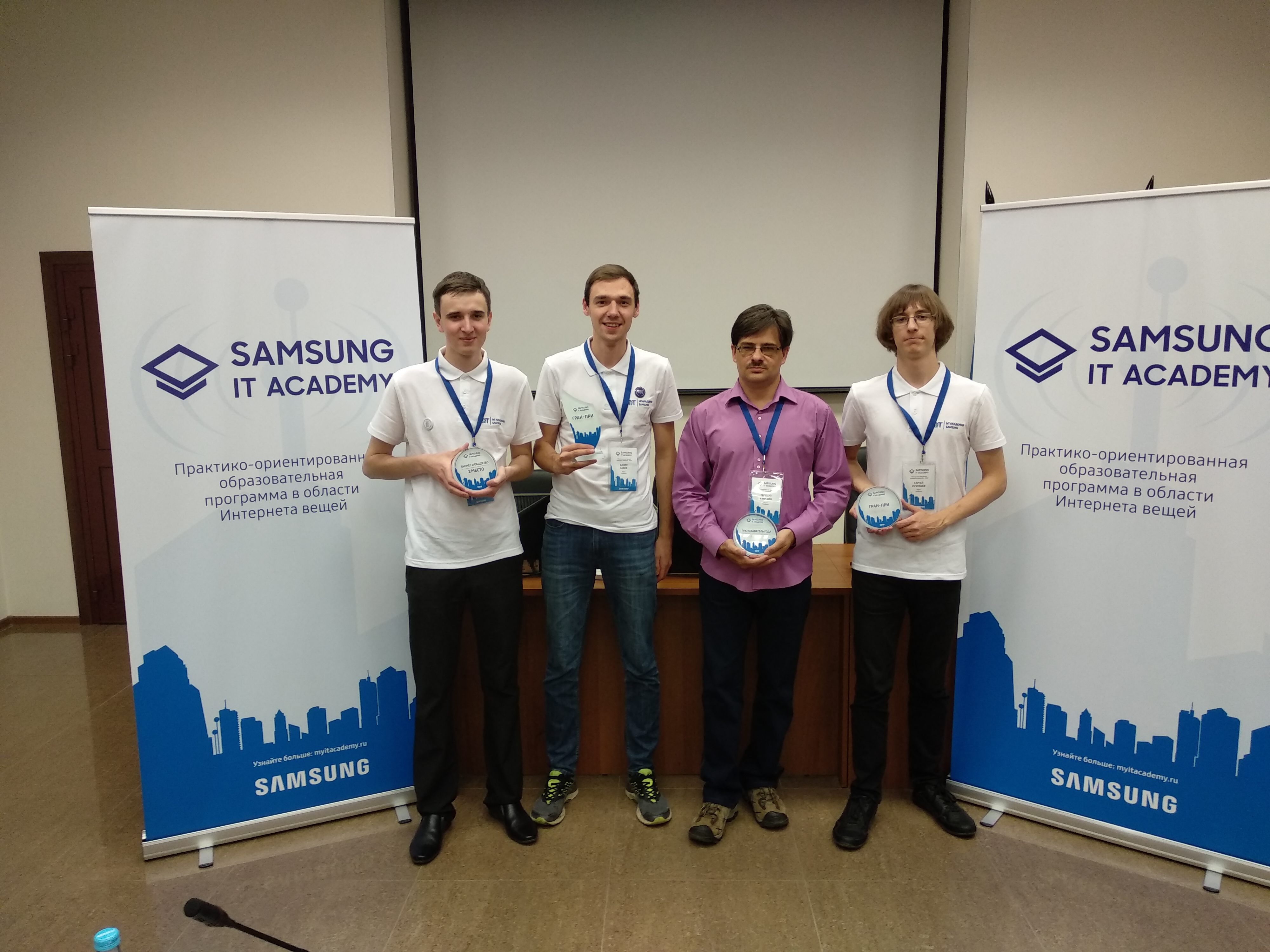
    In the finale, SUSU EECS Team headed by a lecturer of the Department of Automation and Control, Evgeniy Kanashev, presented three projects:

    • Computer-aided system of thermal energy accounting based on power-efficient long-range networks (the author is Sergey Antonov, student of group КЭ-127, Department of Automation and Control);
    • Industrial Internet of Things in a system of controlling the state of pipelines in polyurethane foam insulation (the author is Sergey Kuznetsov, student of group КЭ-127, Department of Automation and Control);
    • Metrological self-monitoring of a pressure sensor in the concept of the Internet of Things (the author is Danil Salov, student of group КЭ-131, Department of Information-Measuring Equipment).

    Upon results of the contest, the project by Sergey Antonov was placed the second in the Business and Society category, and Sergey Kuznetsov was awarded Grand Prix.

    Moreover, a special award for The Best Teacher of IoT Samsung Academy has been established this year. It was given to SUSU lecturer Evgeniy Kanashev.

  • EECS scientists developed an algorithm for Twitter that will reveal the satisfaction of air passengers

    EECS scientists developed an algorithm for Twitter that will reveal the satisfaction of air passengers

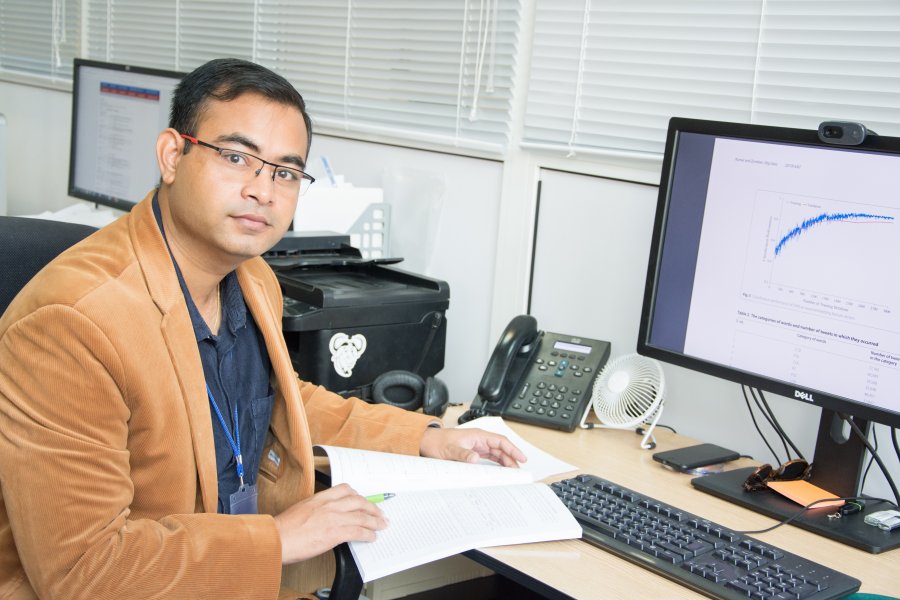
    Scientists of the School of Electronic Engineering and Computer Science of  South Ural State University have developed an algorithm that allows to distinguish between positive and negative feedback from air travelers’ twits using machine learning methods. Innovation represents a program for processing preliminary data in combination with a trained convolutional neural network. The development will increase the satisfaction of airline customers. The results of the study were published in the highly-rated Journal of Big Data (Scopus, TOP-10%).

    Competition between airlines stimulates them to discover ways to attract customers, and the analysis of social networks is one of them. Scientists at the School of Electronic Engineering and Computer Science of the South Ural State University have developed an algorithm for analyzing airline customer posts on Twitter to identify possible reasons why the passenger received positive emotions or felt uncomfortable during the flight.

    “Passenger reviews are extremely important for air travel. The easiest and most traditional way is a customer feedback form. But most passengers are not interested in filling out such forms. For passengers, the most convenient way to share their opinions is through social networks, rather than a feedback form. Twitter is one of the most popular platforms in the world. Information from Twitter can be used to develop recommendations to improve the quality of customer service,” says one of the authors, Sachin Kumar, a senior fellow at the SUSU Department of System Programming.

    The traveler considers several factors at once before choosing one of the airlines. This may be the cost of air tickets, travel time, number of transfers, the weight of checked baggage, reviews of existing customers, etc. Therefore, air carriers pay close attention to these factors in order to improve the quality of service and customer comfort in flight. Using Twitter as an additional source of information when making decisions will help to significantly improve the quality of services and the number of airline customers.

    Using machine learning methods, scientists at South Ural State University analyzed a database of Twitter messages and developed a model for emotion classification in tweets for several popular airlines. The model proposed in the study distinguishes between two categories of emotions: positive and negative.

    “Twitter was used as a data source for research. The program, written in Python, downloads tweets and preprocesses them. Tweets were grouped into several categories, and a logical connection was identified between them to find a possible reason for a tweet that conveys negative or positive emotions of a passenger,” explains Mikhail Tsymbler, Head of SUSU Data Mining and Virtualization Department of the School of Electronic Engineering and Computer Science .

    The results of the study can be used for further development of commercial applications. Airlines will be able to analyze the experience of their customers and try to improve services to attract more customers and provide more comfortable flights. In addition, the approach described in the article can be applied to increase customer satisfaction in other service areas. An indispensable condition is only the availability of official Twitter accounts.

    Olga Romanovskaia, photo by Viktoria Marveychuk
  • Centre of Amateur Space and Satellite Communication was opened at SUSU on the Occasion of the Cosmonautics Day

    Centre of Amateur Space and Satellite Communication was opened at SUSU on the Occasion of the Cosmonautics Day

    Centre of Amateur Space and Satellite Communication was to start operating at South Ural State University. Ceremony of the Centre’s opening took place on the Cosmonautics Day, April 12 at 12:00. In the first part of the Centre’s opening, a video message was received from the International Space Station (ISS), and a communication session with the ISS was on April 15.

    The Centre was opened at the Department of Design and Manufacture of Radio Equipment of the School of Electrical Engineering and Computer Science, under support of the State Duma Deputy Vladimir Burmatov. A set of equipment and radio facilities used for studying the surface of the earth as well as for studying meteorological changes and for other tasks has been placed in the new Centre.

    Equipment of the Centre of Amateur Space and Satellite Communication will be used in the education process as well as within summer and winter schools for students of the SUSU EECS. Also, profession-oriented events for school children will be held in the Centre.

    Ceremony of the Centre’s opening on April 12 featured the Rector of SUSU Aleksandr Shestakov, Deputy Vladimir Burmatov, Director of the School of Electrical Engineering and Computer Science Gleb Radchenko, and Head of the Department of Design and Manufacture of Radio Equipment Nikolay Voytovich. Students of Chelyabinsk schools have been invited to the event as well. Prospective students watched the process of transmission of slow-scan television, the method of transmission of black-and-white or color image via narrow-band channels, at which amateur short-wave radio communication or ultra-short-wave radio communication is used most often.


  • From Emerson to Rakuten: Companies where Students of the SUSU School of Electrical Engineering and Computer Science are In-Demand

    From Emerson to Rakuten: Companies where Students of the SUSU School of Electrical Engineering and Computer Science are In-Demand

    University applicants, who intend to work at international corporations in the sphere of automation and information technology, are getting enrolled to the leading higher education institution of the country.

    Today, South Ural State University’s School of Electrical Engineering and Computer Science maintains traditions of classical engineering education, while being oriented at creation of elite environment for training of high-level scientists and engineers. The School performs training of cadre for a wide range of in-demand professions connected with instrument engineering, radio electronics, automation, information security, computer science and software engineering. Developing autopilot systems, inventing wireless sensors, implementing smart manufacturing technologies, analysing terabytes of data and revealing its hidden patterns, protecting information in the world of the Internet of Things – all of this are the tasks being completed by students of SUSU’s School of Electrical Engineering and Computer Science (EECS).

    Alumni of the School don’t need to worry about searching for a well-paid job. Aside from a degree acknowledged at the international labour market, young specialists also get a considerable portfolio and a valuable experience of solving specific problems. Alumni choose such leading companies as Emerson, Yandex, Google, Microsoft, Kaspersky Lab, Sberbank, and Huawei. Director of the SUSU School of Electrical Engineering and Computer Science, Gleb Radchenko, told us about employment of SUSU alumni, about specificities of the educational process, and about projects which SUSU students are working on.
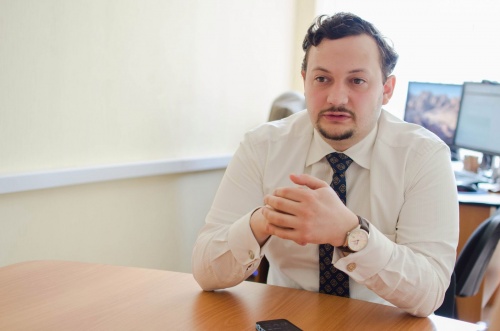
    — Mr. Radchenko, what is new in admissions campaign 2019 for SUSU EECS?

    — The concept of working with South Ural State University applicants has principally changed over the last year. The university has chosen a number of study spheres acting as the strategy vector of the university’s development, which are closely connected with EECS. They are the sphere of digital economy, the Industry 4.0, and the sphere of artificial intelligence. Nowadays, problems connected with switching of various industrial branches to a new technological pattern become of top priority, as production, quality and cost of goods is getting more and more influenced by automation and technologies of the Internet of Things and smart sensor systems, which transmit data to be analysed in intelligent computing systems. Leading Russian industrial enterprises have got actively engaged into this process. Our alumni also work closely on problems in the sphere of Industry 4.0.

    Last year, the largest-in-Russia international conference regarding Industry 4.0 issues was organised at SUSU. The conference was opened by President of transnational company called Emerson, Michael Train, and plenary and section reports were delivered by representatives of universities and companies from all around the world: USA, Poland, Germany, China, Portugal and Italy. Right now, based on the international experience, we are working on a whole set of problems connected with digital industry, including such areas as cloud computing, technologies of industrial Internet of Things, technologies of information protection, methods of data mining, and machine learning.

    — At what extent are students engaged in the work on these projects?

    — Students are executors in all research projects of EECS. Starting from the 2nd and the 3rd years of Bachelor’s study and till the very graduation, students participate in projects, carry out research, and learn analysing the existing problems and offering their own solutions for given problems. School of Electrical Engineering and Computer Science fits harmoniously into the perspective educational concept, because majors taught in the EECS cover practically the entire range of problems of Industry 4.0.

    — What majors are they?

     — One of the blocks includes majors in the sphere of automation and sensor systems taught at the Department of Information-Measuring Equipment, the Department of Automation and Control, and the Department of Automatic Control Systems. The Departments interact with leading international companies. For example, Emerson company has opened its second laboratory at the Department of Information-Measuring Equipment within its cooperation with the university. Emerson’s Competency Centre has the most advanced equipment. The Centre is equipped with unique technologies, including predictive control systems based on neural network methods, which has only started being implemented in the industry.

    There is the Laboratory of Endress+Hauser Swiss Company operating at the Department of Automation and Control under supervision of Lev Kazarinov. In this Laboratory, students explore methods of resource- and energy-saving, and automation of problems of power engineering distribution: they learn how to obtain data for their further processing, how to control systems on the basis of obtained information, how to construct an architecture of such hardware and software systems in order to solve problems regarding optimization of energy resources’ consumption, and how to arrange industrial Internet of Things. Unique systems of industrial Internet of Things get created at laboratories of the Department. For example, autonomous temperature sensors and the system that acquires data regarding the temperature regime, invented at the department, allow obtaining information about the quality of heating in classrooms all around the university.
    — Why do such large corporations like Emerson invest into students of EECS?

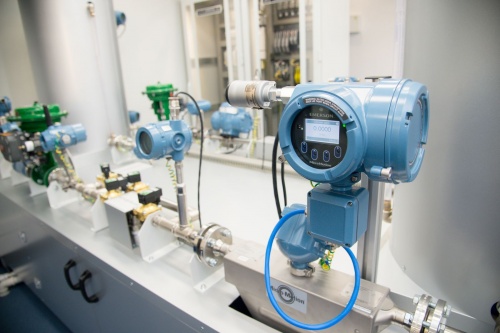
    — Emerson is a strategic partner of the university and the EECS. President of the Company is the Head of our International Scientific Council. The largest, by Russian standards, engineering centre aka Emerson needs well-trained cadre. In Chelyabinsk, the Company has launched a unique plant which produces measuring systems and industrial automation systems; this plant is the pure, hi-tech manufacturing. Moreover, having established the plant five years ago, today Emerson has doubled its territory. The company is in desperate need of engineers, specialists in the sphere of automation and network technologies, and specialists in the sphere of supercomputer simulation. In this direction, Emerson actively interacts with SUSU because SUSU is its key supplier of cadre. Moreover, Emerson can communicate with leading researchers from around the world through our university. For example, a unique laboratory for simulation of measuring systems and self-monitoring of measuring devices was opened at EECS two years ago.

    — What’s the purpose of its operation?

    — I can explain by an example. Let’s say, your company is equipped with a sensor which shows that the temperature is 18 degrees. How do we know if the temperature is correct? How do we know if the sensor is working? We could put the second sensor next to the first one. Let’s say, one of them shows 18 degrees and the other one shows 25 degrees. But which one of them is correct? Answering this question is very hard. Determining correctness of measured data is a very serious mathematical task. All right, let’s say you have 10 similar sensors, and you can go and check manually which of them are working correctly and which of them are not. But this is a very time-consuming operation, don’t you think? In the modern world, the world of the Internet of Things, big plants are equipped with hundreds and thousands of various sensors that display various parameters. We are unable to check whether all of them are working correctly. It is important that we could simultaneously work with data regarding the temperature and liquid consumption, and above all receive data about correctness of this information, so that the sensor informed us that the temperature is 25 degrees with authenticity of 95%. SUSU scientists are working in this direction. There are researches carried out in the Laboratory of Self-Validating Sensors, Systems, and Advanced Instrumentation, supervised by an Oxford University Professor, Manus Henry. It is nowadays that articles on the research results get published in high-ranked scientific journals of the first quartile.

    — What is the novelty level of you know-how? Where and how can your inventions be applied?

    — Right now, the work is at the stage of research and development, which subsequently is going to pass the stage of introduction. This is not some theoretical problem detached from reality. At the moment, you won’t find any sensors which would inform you of both the value of a parameter and the limits of data authenticity. Even if you find them, they will be incredibly expensive. The team of researchers from EECS is creating a new product, so that enterprises of Industry 4.0 could introduce such a brand-new approach and enhance efficiency of their production processes.

    — What other projects are EECS students working on together with scientists?

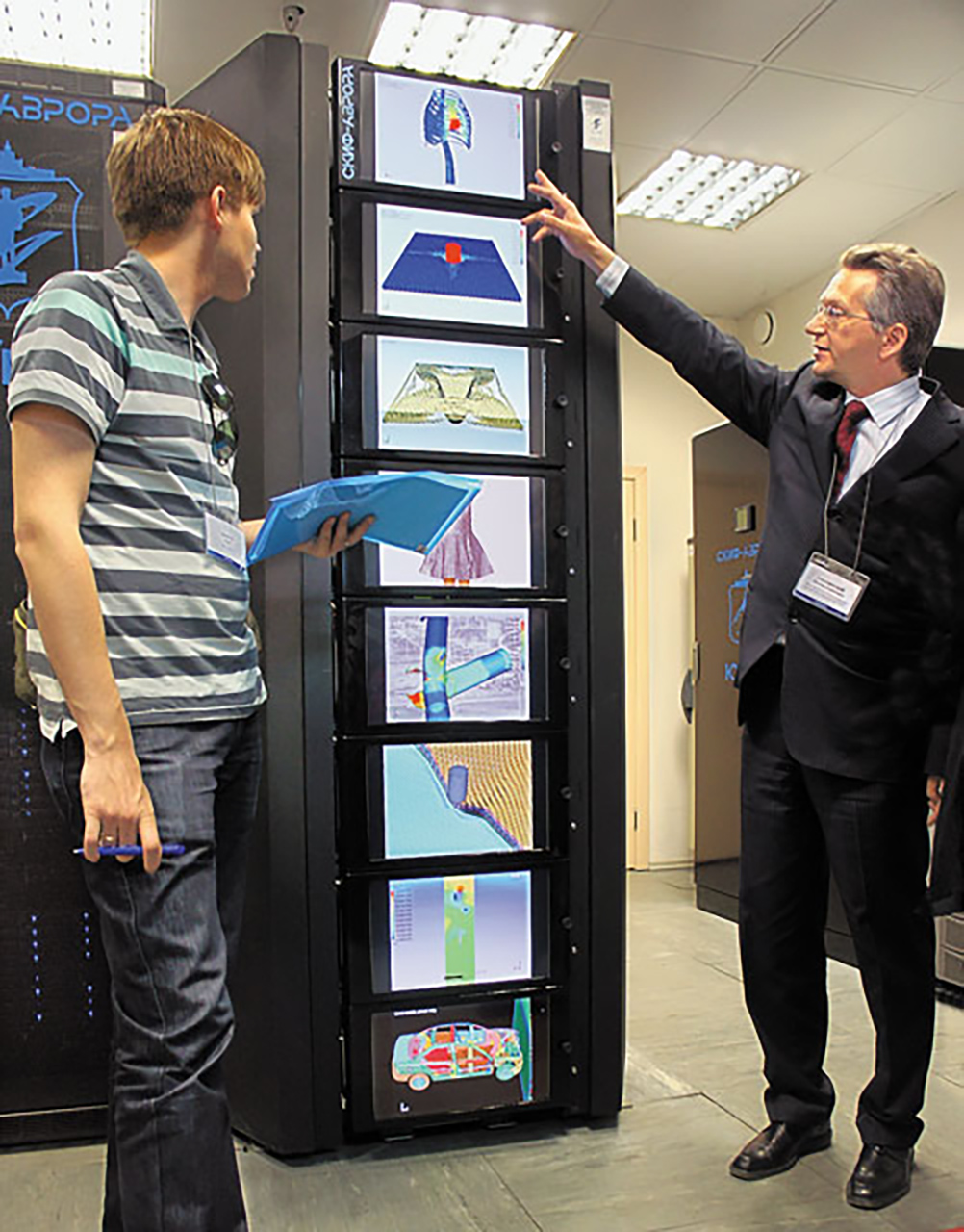
    — Automation is just a small part of work being done at EECS. The next block of problems is data analysis. Let’s say we’ve received measurement data. As we remember, we have thousands of sensors that send us these data every 10 milliseconds. Where are we going to store these data? How do we analyse them? What conclusions can we make out of the obtained information? These problems are the sphere of expertise of specialists at the School of Electrical Engineering and Computer Science’s Department of System Programming, Department of Electronic Computing Machines, Department of Computational Mathematics and High-Performance Computing, and Department of Information and Analytical Maintenance of Management in Social and Economic Systems. These are the problems of data mining which allow making conclusions out of big volumes of information; this includes machine learning and artificial intelligence; this includes the problems regarding development of applications which end users of such systems will be working with. Students majoring in this sphere work on design and development of software systems, create web applications and mobile applications, and use supercomputer technologies for solving various applied problems. Students learn from experience of the world’s leading IT companies. For example, EECS students can study technologies of the Internet of Things within Samsung IoT Academy. Supercomputer technologies are studied on the basis of resources provided by the SUSU Supercomputer Simulation Laboratory, which possesses one of the most powerful supercomputers in Russia.
    — What do the Department of Design and Production of Radio Apparatus and the Department of Information Communication Technology deal with?

    — This is the third block of the tasks related to data transmission, that is the field of radio electronics. Our specialists from the Department of Information Communication Technology are studying new standards of internetworking, the so called 5G standards. The School of Electronic Engineering and Computer Science works with school pupils in this field. We hold very interesting seminars and project sessions for senior pupils: we look at how satellite navigation systems such as GLONASS and GPS are functioning, demonstrate how to get a signal from a satellite, where they are located, and analyse the packages of data received from the satellites. This field’s graduates successfully find jobs in the leading telecom-companies in Russia, such as MTS, Megafon, or Rostelecom.

    At the Department of Design and Production of Radio Apparatus, the School’s students are working on such tasks as the creation of new types of antennae. The Department’s specialists have engineered the systems for automatic aircraft landing in an airport in the conditions of high snow cover. It’s especially relevant in Russia. Classical systems, when detecting an increase in the snow cover thickness, stop working correctly, and there appear difficulties for an aircraft in the mode of automatic landing. A unique antenna was developed, which allows to remove all these disadvantages of classical antennae. And it will help to properly land an aircraft on a landing strip in an extreme situation even in case of very high snow cover.

    — Is someone using these innovations already?

    — Our specialists are closely working with our region’s businesses. Thus, the project on engineering the landing system was fulfilled in close collaboration with Radio Plant Polet. Currently our students are getting ready to work on other tasks of the new generation in the field of aviation, radio positioning and radio landing.

    — Our students are working on such an important issue as information security. Intruding into private informational space and Internet threats to industrial facilities are a serious world problem. What results have you managed to obtain in this field?

    — Today, when we’re talking about the Internet of Things, the information security becomes incredibly relevant. Just one year ago, there was an incident in the USA with baby monitors, which record everything that’s going on in a child’s room and, like mobile phones, allow to get the feedback with the child. It’s turned out that the baby monitors’ manufacturer created a primitive default password, which the customers never tried changing. So, the hooligans hacked the baby monitors, connected to those in the middle of the night, and scared the children by speaking to them in a creepy voice. This is the example of the security problems in the Internet of Things.

    Today we have a lot of things around that are connected to a network: printers, smart vacuum cleaners, baby monitors, CCTV systems, doorbells, and house intercoms. You may have a gas, water or electricity meter, which sends readings to your cell phone — this is called smart house. You can receive data on your mobile phone of be in control of the situation. But if this infrastructure has poor protection, a hacker can take a look into your apartment via your web-camera and see what’s happening there.

    — Information protection in the world of the Internet of Things is an important aspect. Another field, which your students have succeeded in, is the information protection in industrial systems. What projects are being fulfilled in this sphere?

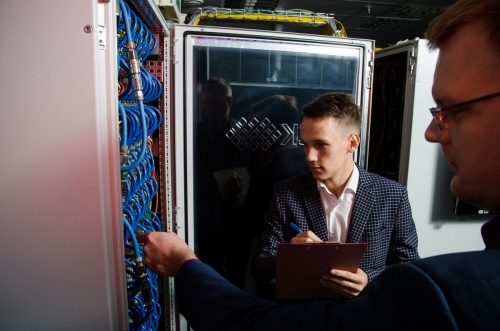
    — Information protection in industrial systems is the main field of work of the Department of Information Security. Here we are talking about both enterprises and autonomous facilities, and the very same autopilots as well. Obviously, online monitoring and process control are very convenient. I can take my phone and see what parameters this or that unit or facility has at the moment. But on the other hand, this convenience brings along danger. If a malefactor wants s/he can organize a specialized attack on such a facility and knock it out of service. The specialists of the Department of Information Security know how to adjust the security system at an enterprise, reveal the sources of potential threats, and focus on protection against such threats. For that purpose a research and education centre was opened at the School of Electronic Engineering and Computer Science, which was launched jointly with Kaspersky Laboratory company.

    — So, the educational process is not just mere theoretical studies, but also project work and solving of the global problems of the world community?

    — Project work is an important component of the educational process. Thus, within Master’s programmes of the School of Electronic Engineering and Computer Science separate projects were launched, which aim at solving certain tasks, and for specifically for which students are recruited. While performing their work, students understand that when they complete their Master’s studies, they will have an experience in fulfilling an interdisciplinary project in the field of information technologies. Besides such a project, it is also a scientific development with the use of artificial intelligence – technologies of neural networks for detecting of metal sticking at a metallurgy production. Already today students are successfully fulfilling this project while taking the internship at an SMS Group enterprise in Germany. Once they complete their Master’s studies, they will have a unique portfolio and job offers from the world’s leading companies. This is a whole new level of a specialist with totally new possibilities to get a much higher salary and a much better job placement.

    — Does the School of Electronic Engineering and Computer Science collaborate with other big universities in our country and around the world?

    — I’m sure that the major and most interesting projects result namely from collaboration. We have brilliant joint projects with different universities. One of such long-term projects in the field of program engineering has wrapped up just this March. It was being fulfilled by Ural Federal University, St. Petersburg Polytechnic University, St Petersburg University, and also by about a dozen universities in Germany, United Kingdom, Denmark, Finland, and Jordan.

    — Why do applicant choose to enrol namely with the SUSU School of Electronic Engineering and Computer Science?

    — Today there’s a different approach to education than before. Every big university under Project 5-100, and SUSU is the participant of Project 5-100, has its own specifics and its own unique experience. If I wanted to deal with computer sciences in the field of Industry 4.0, the tasks of the Internet of Things, including the Industrial Internet of Things, the tasks of artificial intelligence, of the technology of digital twins of industrial facilities, I would have enrolled namely with SUSU, and it doesn’t matter where I live: in Chelyabinsk, Kazan, or Yekaterinburg. This university has unique experience, equipment and academics, as well as contacts with the leading universities from abroad and professors from around the world, and close collaboration with the businesses in our region. Our specifics allows us to state that we feel that the work that we do is of the international level.
    — At what age should one start thinking about his or her future career?

    — School children are always limited in time for deciding on that as already by the middle of the 11th grade they have to make up their mind on what they want to become in life. At the School of Electronic Engineering and Computer Science we organize schools for pupils of the 8th to 9th grades in order to demonstrate to them which tasks, besides computer sciences and programming, they will be able to address if they enrol with us. We share with them about such fields as industry automation, and we explain where they can find very good jobs related to this sphere. Our Bachelor’s students who go to work in Emerson have an opportunity to take internships all over the world, they do very interesting jobs and deal the tasks in automation. If we take the information technologies and radio electronics, our graduates work in such companies as Huawei, Google, Microsoft, Unity, and Rakuten, which is the designer of Viber. We demonstrate practical aspects for the school pupils and talk to them about the possible fields of work.

    Six months ago a Quantorium opened at SUSU. This is unique place for training for students where they can master the systems of UAV operating, robotics, and industrial design. Within Quantorium we launched a pilot project on developing an automated system for mining for mineral resources on asteroids. This is a task the solving of which requires a very broad range of knowledge. Children engineer an automated platform which can automatically take soil samples and analyse them.

    — So, this means that your graduates can easily find jobs thanks to big scope of the obtained knowledge, experience and practical skills?

    — There’s a slightly different problem that the graduates of the School of Electronic Engineering and Computer Science face. Today the businesses around the world have a dramatic lack of staff trained in the fields being taught at the School of Electronic Engineering and Computer Science. This leads to the fact that our students already start working while still in their third year of studies. Engineering companies invite them to take internships, so they become interns and designers. They have to combine their studies and work, and it’s always not that easy. But it’s a fact that there’s a great demand for our graduates.

    Every year we organize job fairs where we introduce our students to potential employers. There are also many federal companies among the potential employers. The issue before our students now is not how to find a job, but how to choose from the available variants the one that will be most beneficial and promising.

    — The companies of what most popular spheres are looking forward to hiring your young specialists?

    — The financial sector, designing of computer games and mobile applications, industry, measurement systems, and radio electronics. The range of fields in which are alumni are working is very wide. I couldn’t name a single sector which could not make use of our specialists. Anywhere, where there are information technologies, or there is a need for automation, our specialists can work or are working already.
  • Quantum Computer Will Make People Relearn

    Quantum Computer Will Make People Relearn

    SUSU-TV presents the second episode of the authorial programme hosted by Igor Klebanov and called “Zolotoye Secheniye” (“Golden Cross-section”). In this episode, the Associate Professor and senior research fellow at the Department of System Programming of South Ural State University’s School of Electrical Engineering and Computer Science, Candidate of Sciences (Physics and Mathematics) in an interesting and understandable way talks about quantum computer.

    There are researches in the sphere of quantum computer science carried out at South Ural State University. Quantum computer provides fantastic possibilities! The world’s leading scientists are excited with the idea of its creation and forecast various dates for this idea to be brought to reality. In this issue, Igor Klebanov considers himself to a “cautious optimist”. We talked to the author and the host of the programme covering scientific achievements about the upcoming science-and-technology revolution as well as about its consequences.

    — What are the possibilities of a quantum computer?

    — Its extraordinary computing abilities are a dream of contemporary scientists. Its basis unit of information – a qubit – can simultaneously be 0 and 1, unlike the classical bit. It is for a reason that the idea of creating this computing device considered fantastic for a long time. For a quantum computer, the problems that a classical computer will be solving within the time exceeding the time of the Universe’s life will be solvable for a foreseeable time. For example, 10 quantum bits (qubits) will replace more than a thousand of classical bits. Having 100 quantum bits, we obtain an incredible number: 10 to the power of 30. And this is multiple orders higher that the capacity of the most advanced supercomputers which “only” perform hundreds of billions operations per second.

    — So when will our computers follow the fate of bleepers?

    — Unfortunately, this question can’t be answered. Generally, for the first time the idea to create a quantum computer was said out loud more than 30 years ago. It was proposed by two outstanding scholars: Russian mathematician Yury Manin and American physicist, Nobel laureate Richard Feynman. Physicists, mathematicians and programmers have been developing this idea ever since. Nowadays, however, the problem of creating a quantum computer in a metal form still remains unsolved. The only existing are small-power test samples consisting of several qubits.

    Large computer-making corporations and multiple research laboratories are trying to create a full-fledged quantum computer which would consist of at least 50 to 100 qubits. But so far, this problem remains technically unsolvable because there are serious difficulties. The thing is, these units of information should be stored somewhere without being damaged, but qubits are very temperamental, I would even say very sensitive. Their storage costs a lot of money and demands huge physical resources. Besides, we need to learn transmitting these units of information so that they would not get destructed during the transmission. We need to learn managing qubits, and right now this is a priority task. Therefore, it is hard to say when we will get rid of our computers as of useless machines. This might happen in five years or in fifty years…

    — But is this going to happen for sure?

    — And again, there are different opinions regarding this question. If I analyze this question as a physicist and a theoretic, I will come to a conclusion that this will happen. Because there are more and more new systems getting invented; they are more exotic and less temperamental compared to those that physicists are working with now.

    — Let us say this has already happened. Is it possible that the quantum computer will turn out to be smarter than a human and enslave its own creator?

    — This is an interesting question! Becoming smarter than a human is unlikely. Even the most complex quantum calculation can’t compare with capabilities of human intelligence. Although, without a doubt, possibilities of the quantum computer will be much closer to possibilities of the human brain. Moreover, it is nowadays already that models of quantum computers are used for simulation of human mental processes. What about enslaving… Basically, to be honest, ordinary computers have already enslaved people. We can’t live without the Internet or a smart phone… In other words, we are already dependent on electronics.

    — So, in a prospect, the quantum computer will provide people with massive possibilities. But is it possible that we will discover something that crosses out the entire history of our civilization’s development? Won’t this horrify us?

    — Crossing out is unlikely as every discovery has the limits of its applicability. Everything that we’ve discovered will remain within these limits. Another thing is that having started research with the use of the quantum computer we will really be able to discover some new phenomena, new laws that would correct or radically change our ideas about the world.

    — Getting a new worldview is scary or enjoyable?

    — At the beginning of the 20th century, the worldview had essentially changed. The theory of relativity and quantum physics came into existence. Was this scary for people in their everyday awareness or for people who are barely interested in science? By the way, those who are consumers of scientific results are those who, in my opinion, do not especially worry about the worldview.

    — Do you imply that only scientists will horrify?

    — They will be either horrified or excited… By the way, at some deep levels of our consciousness, we still think that this is the Sun rotating around the Earth, because our eyes tell us so. It is hard to explain that things are just the opposite when a child sees the Sun’s movement across the sky. The true image is a high-level abstraction to which we difficultly get accustomed at school. Therefore, we in our everyday awareness are quite narrow-minded.

    Regarding the work of a scientist, it takes place here and now; it does not depend on what is going to happen. When Ptolemy was constructing his system of the world, he didn’t know that Kopernik will come into the light and propose an absolutely different system. So the purpose of a scientist’s work is limited by time frames, by the frames of his life anyway… Nevertheless, the worldview that currently exists is just some kind of approximation to the truth, a small step forward. So quantum computers are likely to contribute to this movement forward due to their incredible capacity and performance.

    — Please tell us about research carried out in Chelyabinsk.

    — Development in the sphere of quantum calculation is carried out by South Ural State University. At that, I would say, the university is in the mainstream of the world science. Small group of researchers is headed by Professor Sergey Podoshvedov. He and his students are developing one branch of this sphere, which are optic quantum computers. They are computers based on control over photons, the specially prepared quantums of light. This is not the only way to create a quantum computer, though a very prospective one. The group is having a finger on the pulse: the researchers publish articles in high-level journals and cooperate with specialists from abroad.

    — What are the spheres for practical application of quantum computation?

    — There are many such spheres. First of all, cryptography, the science of information coding and decoding. In order to break a code and get access to a credit card, one needs to expand a multi-digit number into simple factors. A quantum computer can make it really fast. Which means that software for protection will need to be developed because a classical computer will be useless against the quantum attack. Weather or financial forecasts can be made by a quantum computer as well.

    — Will it be able to generate artificial intelligence?

    — I would say that an essential breakthrough in this sphere is possible. It is now already that the theory of so-called neural networks is being developed. Unmanned cars which are to be controlled by these networks are being developed as well. But so far, there are only low-power samples. As soon as they create a big quantum computer…

    — …The major part of people on the planet will become unemployed?

    — You know, that is the question. I can barely imagine a computer that would replace a human doctor. Although, there is already a usual classical neural network called Watson which can make a diagnosis based on big data analysis. But it’s not a disease that should be treated but a patient. This means that in-person communication is necessary. And I can hardly imagine that the quantum computer will replace a teacher. Although, it is now already that people can learn online. But in-person communication is important in education as well.

    Education is not only about information. This is a certain “twist” of human brain towards one sphere or another. Me myself is an experienced teacher and I keep thinking whether this “twist” can happen without participation of a human teacher. You can learn dancing “just for fun” with the use of Internet, but if you want to become a professional dancer… There is such an expression as “set the legs”, which can only be done by a human choreographer. It is also necessary to “set the brain” and not just fill it with information. I don’t believe that in this sphere the quantum computer will be able to perform better than a classical one, though the tool will be more powerful. In the industrial sphere, many things are already computer-aided. But after all, there is a living person who has to make decisions and press the button.

    — So you are saying, there won’t be global unemployment?

    — I think, the quality of work will change. It is clear that people will have to relearn. Any science-and-technology revolution leads to this. When mechanical machines had been created, the Luddite movement came into existence. In order to stay employed, they were breaking the machines instead of learning to handle them. But a quantum computer is not easy to break. So we will have to live under conditions of the quantum computer era. However, I would like to say it once again: all this might happen in a distant future. At that, even if I were an optimist seeing through rose-tinted glasses, I would keep recalling a wise saying: in every apparatus you first of all need to find the Stop button. I want to believe that the quantum computer will be used for a good, and the humanity will be smart enough to keep the civilization safe.