Рубрика: Без рубрики

  • The Third Day of the International Forum in the Field of Industry 4.0 Came to End at SUSU

    The Third Day of the International Forum in the Field of Industry 4.0 Came to End at SUSU

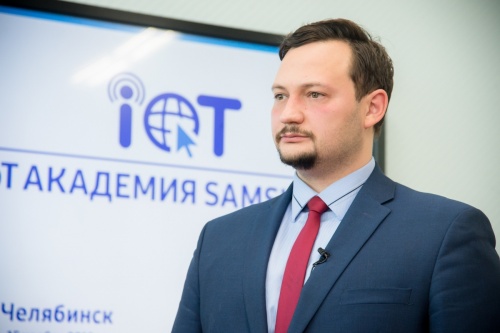
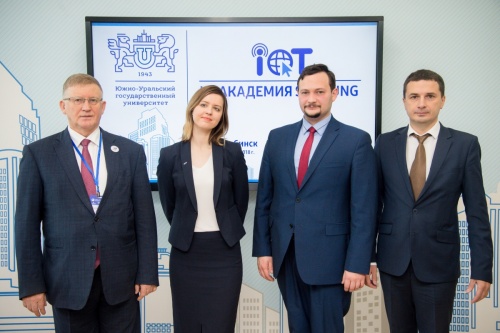
    The third day of the 2018 Global Smart Industry scientific forum began with the ceremony of opening of Samsung IoT Academy Laboratory on the base of School of Electrical Engineering and Computer Science of SUSU.

    Deputy Minister of Information Technologies and Communications of the Chelyabinsk Region Vasily Kokoryukin, Rector of SUSU Aleksandr Shestakov and the leading specialist of Samsung Company Tatyana Volkova, who presented the high-technology possibilities of the laboratory to the students and the guests and told about the peculiarities of the educational course, took part in the opening ceremony.

    Aleksandr Shestakov noted the importance of the laboratory modern technologies use for the realization of project-oriented educational platform at the university:

    “SUSU is moving towards the digital industry and the Internet of Things. Today, in the frames of the international conference, it is the second important object, which we opened. Samsung Laboratory and its programme products will be used in the project study and significantly enhance the quality of the preparation of our students as the specialists.”


    The representative of the regional administration Vasily Kokoryukin underlined the significance of the event for the improvement of the city infrastructure:

    “Today we consider the implementation of such modern concepts as Smart City and Smart House where the service technologies are not possible without the Internet of Things. While solving such tasks, it is important to integrate the worthy scientific society, which is presented at SUSU, the business representatives and the coordination element as well as students, who being moved by the progressive ideas can create and fulfill the scientific discoveries for the sake of society.”  

    After the opening of the laboratory Tatyana Volkova, the leading specialist of the educational projects of Samsung Research Centre and author of the educational course of Samsung IoT Academy, reported on the subject of “Preparation of IoT-specialists in the Context of the Engineering Education: Peculiarities and Problems”.

    “Nowadays, there is a big problem in modern engineering education, and it lays in the fact that engineers and programmers get their training separately. With the use of our possibilities, we aspire to teach students new technologies which are on the intersection of engineering and programming disciplines. If previously the sphere of Internet of Things was too expensive and unaffordable, today the situation is changing: the cost of communication is becoming cheaper, and the price of technology, sensor devices, and computational capacity is reducing as well. We would like our students to be on the frontier of science and aware of these changes; we want them to know the essence of digital industry, and not just study this theoretically but review certain cases which are already being implemented in Russia and abroad.”

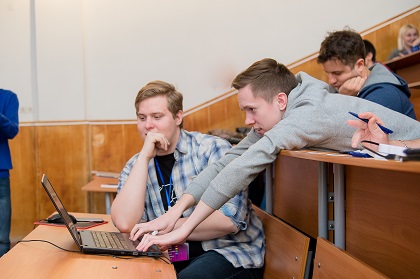
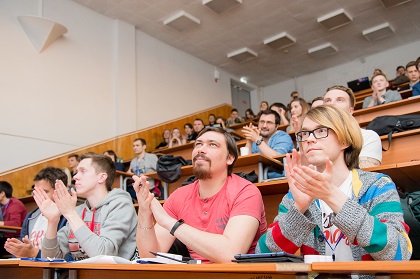
    On the third day of the International Conference’s operation, in the course of a plenary session, speakers thoroughly traversed various aspects of Industry 4.0: data security in the age of digitalisation; specificities and challenges of Education 3.0; correctness of changes for IoT sphere; threats for small and medium business in industrial Internet of Things, etc.

    “University of the future is connected with technology and Industry 4.0. I think that such university must have technology support based on advanced Internet technologies, such as cloud computations or high-performance computer technologies. From engineering point of view, the university should be completely equipped with new-generation computational facilities. This is important for training of students majoring in both engineering and humanities as well. And this complies with requirements of the Industry 4.0,” noted Goran Putnik, who delivered a speech at the session with a report entitled “Education 3.0 and social networks-based education for efficient training and integration with the industry,” the University of Minho (Portugal).

    Another important aspect, according to Professor Putnik’s opinion, is connected with relationships between students and teaching staff. If in a traditional university the prevailing position was held by professor, new technology can change that: the process of education should be a joint creative process, combining study materials, knowledge and cooperation of teaching staff and students as equal partners.

    Andrei Tchernykh from Ensenada Centre for Scientific Research and Higher Education (CICESE), Mexico, shared the rules of preserving information security in the age of digitalization with his colleagues. One of the recent scientific works of the researcher was dedicated to the issue of counteracting against the conspiracy of those having legal access to information.

    “Information security is such a complicated issue, and to ensure protection here is quite problematic. You can hack bank accounts, read private correspondence, etc., without even leaving your office, that is why a security ecosystem is a system that guarantees security at all levels, starting from the source of generation of this information and all through to the point when the document is being read or processed.”

    Professor of the University of Oxford (Great Britain) Manus Henry delivered a presentation on checking the correctness of measurements for the Industry of Things, and stressed the efficiency of collaborating with the SUSU scientists in this field:

    “My research deals with developing new techniques of signal processing, which combine powerful computing capabilities and simplicity of engineering, what is required for the future products and services under Industry 4.0. Jointly with our SUSU colleagues we are working on monitoring of the condition and checking the accuracy of those techniques.”

    Today digitalization penetrates into every aspect of life and plays a huge role in development of the world’s industry. However, for small and medium-sized businesses the Industrial Internet of Things may bring along certain threats, believes Alessandro Beghi, Professor of University of Padova (Italy):

    “I think that such problems include the issues of ensuring information security, rigidity of corporate values, as well as the absence of generally accepted standards in the field of IoT. The financial expenses are also a significant factor since the implementation of such technologies requires considerable investments. Such investments are seen as excessive by many companies, and the future profits might be difficult to predict. That is why small businesses often doubt whether the Industrial Internet of Things is reasonable or not.”

    The day, during which many interesting presentations were delivered, closed with the discussions of the latter at topical sections and round tables.

    Oksana Kuvakina, photo: Oleg Igoshin
     

  • Job Fair Held for SUSU Students

    Job Fair Held for SUSU Students

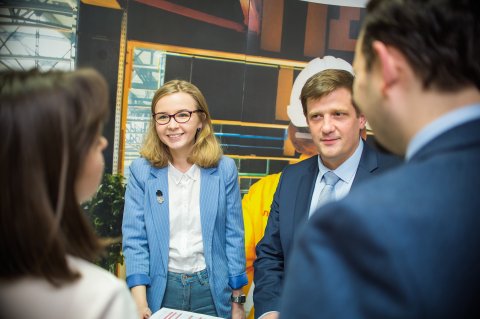
    The School of Electrical Engineering and Computer Science of South Ural State University organised a Job Fair for senior students.

    The Job Fair aimed at students, graduates, and Master’s students in management and instrumentation engineering, radio electronics and computer science, and also at the leading employers at the regional market in these fields of business.

    Gleb Radchenko, Director of the School of Electrical Engineering and Computer Science, delivered a welcome speech to guests of the event.

    “Today, the School of Electrical Engineering and Computer Science is a centre for development of information technologies and radio electronics in Chelyabinsk. Our graduates are the best specialists in this field. During the next months many of our students will have to face a difficult task – choose their future workplaces, or choose the topics for their final projects. I hope that today’s Job Fair at the School of Electrical Engineering and Computer Science will help you make these difficult decisions.”


    During the Job Fair, students had the opportunity to personally meet and talk with the top managers and representatives of various companies, leave their resume with them, and find out about the most interesting projects and the conditions for being selected to work at a company.

    The Job Fair was divided into two sections. 12 leading companies of the region came to meet and exchange contact information with the event’s participants. The representatives introduced their companies and spoke about the opportunities available to future employees in their existing projects. The companies included: ElMetro-Engineering, Uvelka, Intersvyaz, ChelPipe, 3DiVi, SKB Induktsiya, Zababakhin All-Russian Scientific Research Institute of Technical Physics, Soft-Plus, Metran Industrial Group, NPO Elektromashina, Napoleon IT, and OJSC Chelyabinsk Zinc Plant.

    Leading specialist in working with trainees at ChelPipe Irina Skobeleva spoke about the Trainees programme, which has been offered as part of the agreement with South Ural State University for some time now.

    “We have a project called Trainees, which allows students to combine their studies with work – from 20 hours a week. It is important to attract students of the School of Electrical Engineering and Computer Science in particular – this is the field in which we need staff. The Trainees project is applicable to everyone, so anyone who wishes to give us their resume can do so.”

    Director of the Centre of Commercial Internet at Intersvyaz company Oleg Plotnikov explained why SUSU students are the most valued staff for one of the most popular internet providers.

    “There are not many universities in our city that train students in the technical fields. Whereas we can find students in programming from other universities, we cannot find anyone in radio electronics and communication systems except in SUSU. In this respect, the university has no competitors.”


    At the end of the event, the attendees had the chance to personally get to know the representatives of companies which were of interest to them and ask questions related to salary, combining work and study, and the possibility of writing their final papers or being accepted for internship.

    The Job Fair event was held at the School of Electrical Engineering and Computer Science for the first time, but according to SEECS Director Gleb Radchenko, this event will now become traditional, which will give students the opportunity to get to know key employers in information technologies, instrumentation engineering, and radio electronics.

    Marina Kovyazina, photo by Oleg Igoshin
  • Agreement on the Opening of a Program for Studying the Internet of Things Signed by Samsung

    Agreement on the Opening of a Program for Studying the Internet of Things Signed by Samsung

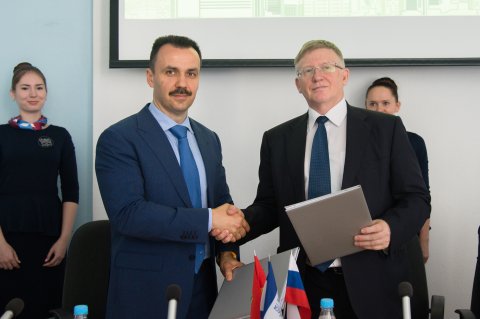
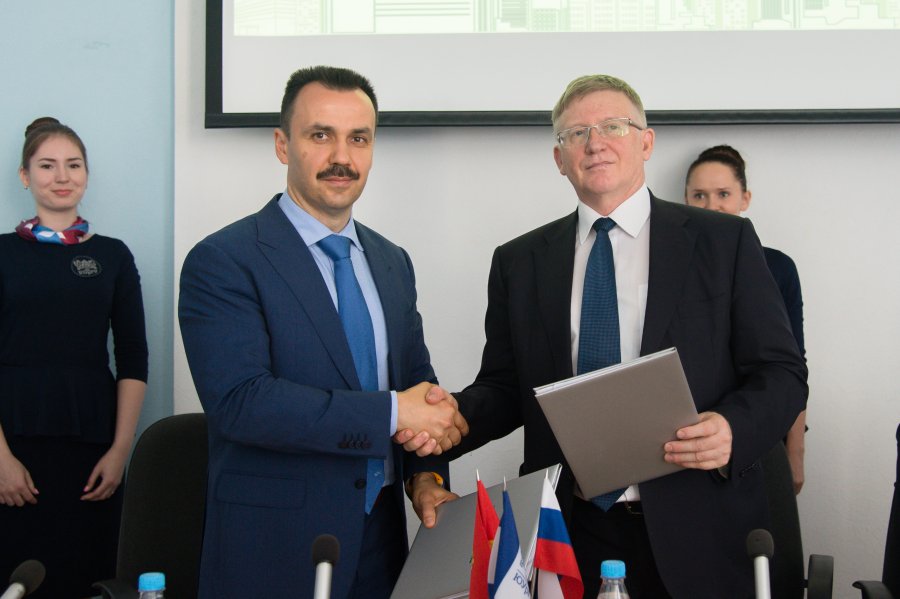
    South Ural State University is working with the international leader in information technology and radioelectronics – Samsung Company. On Tuesday, June 26th, SUSU Rector Aleksandr Shestakov signed an agreement on the opening of the Samsung IoT Academy program and the unique training laboratory for studying technologies of the Internet of Things at the School of Electrical Engineering and Computer Science. SUSU students majoring in engineering will get the chance to complete cost-free, in-person training in the most in-demand technologies because in April 2018, the university’s application won a contest for implementation of a specially-developed course at the SEECS.

    “Samsung IoT Academy” is a social and academic project for development of an expert center of the Internet of Things and data mining, which the company offers in leading Russian universities. IoT is called the next stage of development of the internet, an integral part of the fourth industrial revolution – Industry 4.0. It involves connecting a multitude of devices into a network, including household electronics and industrial equipment using various channels of communication, which makes it possible to obtain and analyze large volumes of data. In this way, technology equipped according to the latest inventions in this field do not require human interaction to be regulated. These devices should make peoples’ lives easier and enable the growth of companies’ productivity.

    Experts of the company’s Research center elaborated a special academic course and methodological materials intended for two academic semesters. A special IoT laboratory will be opened at the School of Electrical Engineering and Computer Science where Samsung mobile and wearable devices, equipment for fast prototyping, and Artik microcomputers will be installed. The students’ work on specially-developed materials using high-tech devices by Samsung is a good example of implementing the project-based education, which is being actively introduced into the academic process in all academic divisions of South Ural State University, the goal of which is to offer students the chance to create real projects under the guidance of experienced professors, gaining the necessary skills for their professional activities within the walls of their alma mater.

    “Samsung is one of the international leaders in the digital industry. The Internet of Things is an important and promising direction for SUSU, as it is built on the techniques of project-based education, which we are launching in September. I hope that the university’s relationship with the Internet of Things will be beneficial in terms of the development of these ideas in Russia,”noted SUSU Rector Aleksandr Shestakov.

    SUSU students will study modern technologies in specially-developed cases – real examples of tasks from experts in the sphere of Internet of Things. The first case – “Electronic lock” – is a training case, which is needed to master the equipment. The second case – “Monitoring in a pharmaceutical warehouse” will help keeping track of the temperature and humidity from sensors using wireless communication. The third academic case is “Adaptive lighting”, which introduces the students to working with system of lighting for office centers. The fourth case – “Smart garbage cans” allows students to control how full trash cans become as well as their location. The fifth case “Smart greenhouse” is a group project. In the second semester, students elaborate individual projects.

    “Samsung IoT Academy is a unique IT project which allows students to get involved in project work. It allows us to use equipment from our partner in the academic process. It also allows us to rise to a new national level and compare our students’ education and our projects with the level of education and projects of leading Russian universities. Creating the joint course with Samsung is just the first step in our partnership. In the future, we are planning on creating a joint master’s program on the Internet of Things in Russian and English,” commented the Director of the SUSU SEECS, Gleb Radchenko.

    The Director of corporate projects and interaction with governmental authorities at Samsung Electronics Russia, Sergey Pevnev, noted that from the large number of universities in Russia, just 10 were chosen for implementation of this program, and SUSU’s participation was predetermined by its position in the global research and education space and the university’s material and technical facilities.

    “SUSU was chosen for a reason. In addition to the fact that this is one of the leading technical universities in the country, it distinguishes itself by the practice-oriented approach and a strong focus on project work. The university is part of the 5-100 Program for leading universities. The fundamental and technical facilities, teaching staff, and focus on IT-technologies makes me sure that the new course of Internet of Things will be in-demand and will be effective for interested students,” emphasized Sergey Pevnev.

    SUSU’s partnership with Samsung Electronics will allow the university to perform training of specialists in the sphere of Internet of Things and data mining methods, who will work in this area not just abroad, where the sphere of IoT is more developed, but in Russia, especially in its industrial center – in the South Ural region. Konstantin Makarenko, Head of the Office of Technical Development of the Ministry of Information Technologies and Communications in the Chelyabinsk Region, spoke about how the regional labor market needs professionals with experience in Internet of Things devices:

    “We are very happy to have such a program here in the Chelyabinsk region, because the government is actively supporting smart city initiatives. Right now, we are offering a pilot project in the city of Satka. Based on its results, we will consider the future development of these projects. We understand that life is moving forward, and without smart city technologies and industrial Internet, we will not move far. So, I think that this project will develop actively, and students and participants of the Samsung school will be in-demand around the world as well as within the region.”

    The program will also contribute to the solution of a task which is important to Chelyabinsk and the region – the SCO and BRICS summits in 2020, since this requires attracting people with a wide range of competencies, who are able to develop the economy of the region.

    “This is a significant event for South Ural State University and for all of our region. This is the beginning of a big program which will fill the market with high-class specialists who can apply their knowledge and experience in various fields of economy. It’s very important that it is being completed in the lead up to the large international event in 2020 — the SCO and BRICS summits. And before the event, we will already be able to demonstrate intermediate results. I think that this project will have a positive impact on the region’s economy as well as the national economy as a whole,” noted the Deputy Minister of Education and Science of the Chelyabinsk Region, Elena Zayko.

    Samsung Electronics Company will offer methodological and technical support for teachers, including access to the system of online education. The Company offered the newest equipment for the specialized IoT laboratory: equipment for quick prototyping, Samsung ARTIK microcomputers, and other devices.

    After signing of the agreement, the leading specialist in academic projects, author of the Samsung IoT Academy academic course Tatiana Volkova spoke about the Internet of Things in Russia and offered a master class in which, in a game-based format, students, teachers, and representatives of the Ministries of the Chelyabinsk region worked with devices of the Internet of Things: they were offered the chance to connect to a specialized network using their smartphones and use Samsung sensors.

    “We understand that we can endlessly speak about something, but before you actually hold it in your hands, you will not understand what we’re talking about. So, I decided that it’s better to offer a practical introduction. In my mini lecture, I tried to explain the Internet of Things, about which so much is said. I would like to explain how we at Samsung see this technology, what it is, and what the benefit of the Internet of Things is,” noted Tatiana Volkova.

    Let us note that providing research and academic support for the region’s industry for transition to Industry 4.0 is one of the university’s key tasks. Solutions based on application of IoT technologies can find wide use in various sectors of economy and industry.

    Azaliya Sharafutdinova; photos by Oleg Igoshin, Viktoria Matveychuk

  • SUSU concluded a Memorandum of Understanding  with Aalborg University

    SUSU concluded a Memorandum of Understanding with Aalborg University

    A Memorandum of Understanding was signed on the initiative of School of Electrical Engineering and Computer Science (EECS) of SUSU with the University of Aalborg (Denmark), which is represented by the Center for Communications, Media and Information Technologies.

    The conclusion of such an agreement became possible as a result of close cooperation between School of Electrical Engineering and Computer Science (EECS) and the Center for Communications, Media and Information Technologies of the University of Aalborg in the international educational project Erasmus + PWs@PhD.

    The goal of the present Memorandum is the co-operation in educational and scientific research areas, development of exchange of students, graduates and teaching professors. The Memorandum assists:

    • the development of joint educational programs for bachelor and master degrees including the programs of double-diplomas;
    • the arrangement of training for improvement of scientific skills of professors, postgraduates, graduates and masters;
    • exchanging the experience of the development of the advanced methods of education;
    • arranging the international forums (symposiums, workshops and conferences) including the use of distance technologies;
    • arranging the joint educational and scientific projects.
  • Graduate Students and Faculty of EECS SUSU Took Part in the International School of Software Engineering in Rostock University

    Graduate Students and Faculty of EECS SUSU Took Part in the International School of Software Engineering in Rostock University

    The fifth international school of software engineering was held at the University of Rostock (Germany) as part of the Erasmus+ PWs@PhD project from  2 October to 13 October 2017. The school was attended by more than 30 graduate students and employees of 10 universities from 6 countries. From the South Ural state University, the school was attended by 6 representatives of School of Electrical Engineering and Computer Science.

    The delegation included the Dean of EECS Gleb Radchenko, associate professor of system programming department Pavel Kostenetskii and a senior lecturer of department of information security Vlada Zhernova, and also 3 PhD students (Ksenia Nikolskaya, Vladislav Iashin and Andrey Averin) from the department of computers and information security department.

    There were leading scientists of Germany and Belgium who took a part in the school. The school was devoted to models and modelling in software engineering. The main emphasis was placed on the development of business process models and the creation of the user interface of the software.

    Delegates shared by their impressions:

    «The most memorable event was a visit to the educational and research laboratories at the University of Rostock. Scientific laboratories are equipped with all kinds of computer equipment and various sensors. For example,12 Kinect sensors and several high-speed cameras are mounted at different angles in a laboratory. With all of these sensors, scientists recreate the motion of video speakers in three-dimensional space and produce a change in the viewing angle of the interlocutor on a multimedia screen that occupies the entire wall. The result is a feeling that both interlocutors are in the same room», — says associate professor of system programming Pavel Kostenetskii – «Another interesting laboratory is equipped with dozens of sensors that capture the movement of people on the premises, the entire floor and ceiling in it covered with such devices. In addition, we looked at the audience, equipped with the latest technology, in which students study. We saw interesting approaches to the organization of the educational space, which can be repeated at our University».

    Vladislav Yashin, PhD-student of the Department of computer, noted that the visit to the software development center in Schweirin made a great impression on him, and the report of the staff of this center was very interesting and useful.

    «I expanded the idea of the user interface, its form, interesting developments because of the participation in the school» — V. Yashin says, — «Many lectures were interesting and memorable. I will apply many of the acquired knowledge in my research and work, such as the paired review and pre-implementation assessment procedures. Undoubtedly, the experience of listening to lectures in English is very valuable.»

    «Another important result can be considered established scientific ties» — K. Nikolskaya says — «we met with scientists in the field of information security such as Professor Clemens H. Cap and Professor Thomas Mundt. It was interesting to look at the model of information security courses in Germany and see their projects. It was decided to create a joint study in one of the priority field — the research in the field of blockchain technologies».

    The next school of software engineering within the Erasmus+ PWs@PhD project will be held in February 2018 at the University of Central Lancashire (Great Britain).


  • International Festival of Computer Games Development Held at SUSU

    International Festival of Computer Games Development Held at SUSU

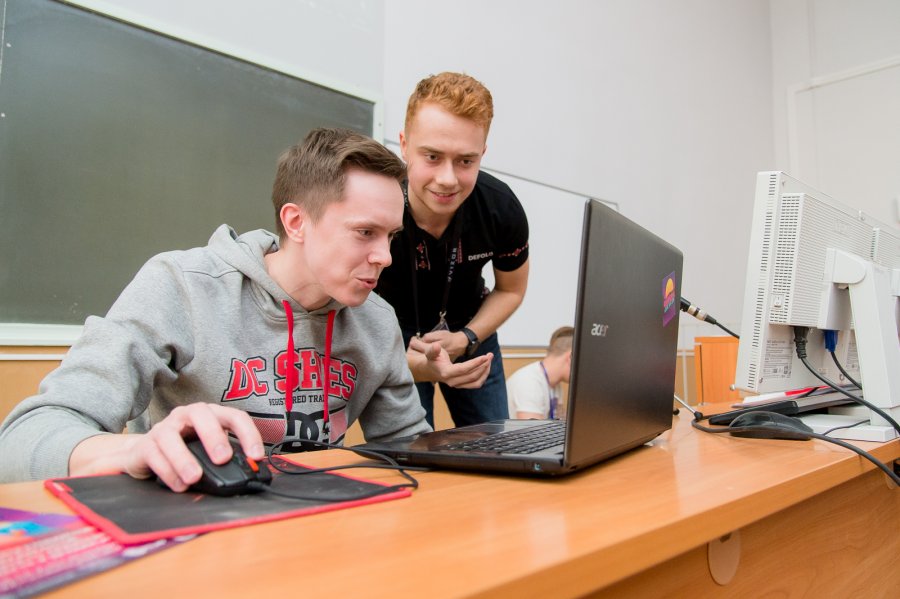
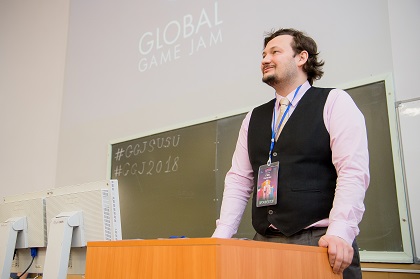
    Last weekend, Global Game Jam international festival of computer games development took place at SUSU. Participants had to create a game on a given topic, which is revealed only at the beginning of the Jam, within 48 hours.

    “This is the 5th year we’ve been holding Global Game Jam. This is the event where students try themselves in GameDev, which means they write games in extremely short time. Writing a game within 48 hours is a real challenge. But participants have always demonstrated good results and created worthy games which could be further developed and sold,” said Maksim Tuprikov, GGJ coordinator at SUSU.

    The event is held simultaneously at 800 platforms in 109 countries of the world. In Chelyabinsk, the main organizer of the Jam is SUSU’s School of Electrical Engineering and Computer Science.

    “This is an incredible event which has been inspiring Chelyabinsk’s community of programmers for the fifth year; not only computer games developers but also software developers who for a weekend can put aside their routine business applications and do something really interesting,” noted Gleb Radchenko, Director of the SUSU School of Electrical Engineering and Computer Science.

    During the previous 4 Jams, 68 games have been created. This year, 23 more games joined the list. This year GGJ’s topic was intermission. Each team of developers had their own approach to implementing this concept.

    “The Jam’s topic, as usual, is quite abstract,” noted Ruslan Vovchenko, one of the Festical’s participants.“You can relate it with anything, but it helps determining direction of a game. For example, our game is about a blind monk who is trying to find the way out of a labyrinth by following a ray of light. Our goal is to transmit this light to him and lead him to the exit.”

    Not only programmers take part in Jams. Artists, screenwriters and even musicians can also join the competition.

    “We created a game about infection. A gamer starts as an infected character and his goal is to contaminate other people. We made it just by three of us, our team had a programmer, a designer and a game designer,” said Andrey Filatov, a GGJ participant.

    All participants of the Festival received certificates of participation in Global Game Jam – 2018, and the best games were awarded with diplomas and sponsor prizes.

    You can review the games created at the Jam here.


  • Winners of the SMS Group Data Challenge Contest Awarded at SUSU

    Winners of the SMS Group Data Challenge Contest Awarded at SUSU

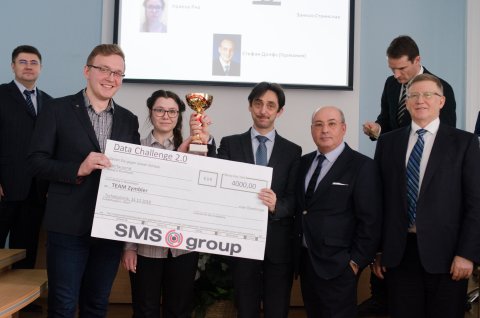
    The awarding ceremony for winners of a contest for data analysis, SMS Group Data Challenge, which was held from September 1st through December 1st, 2017, was held on December 14th at South Ural State University.

    The goal of the contest was to develop an algorithm which would predict sticking during the metal rolling process based on analysis of big data.

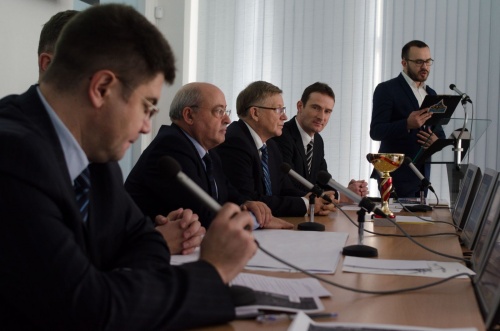
    SUSU Rector Aleksander Shestakov delivered a welcoming speech at the opening ceremony.

    “Today, the world is changing quickly, including the technological sphere. Digital industry is the trend for development of manufacturing in Russia, Germany, the USA, and all around the world. The developmental strategy for our university is that we focus on working with companies which operate in the global market and we solve big, international-level issues together with these global companies. One of such companies is SMS Group. The second company for which this contest is of interest is the Magnitogorsk Metallurgical Combine. This contest is the part of our university’s developmental strategy which is in line with the developmental strategy of industry,” said Aleksander Shestakov.

    Pino Tese, Vice President of SMS Siemag Company, honorary SUSU professor, also greeted those present.

    “My colleagues and I chose a very serious problem. The task that was set before participants was based on the technical realities of businesses around the world. A few months ago, when the contest was just announced, I gave the participants some parting words: whoever works on this task should forget about the traditional thought processes. The traditional finite element method will not allow for the problem to be solved in 3 months. By the results we can see that at least 3 teams listened to my parting words,” said Pino Tese.

    8 teams from South Ural State University and 2 teams from Germany participated. Of the 10 teams, 8 teams prepared the solution and sent to jury review, 7 of which were from SUSU and 1 from Germany.

    Dirk Liftucht, Head of the Department for development of components and casting technologies at SMS Groups, talked about the basics of projects and methods of analysis and also presented the results that the teams obtained.

    The best results in terms of the accuracy of predicting products sticking were shown by three teams, two of which represented South Ural State University. Each of these teams defended their solution before the contest jury. Based on evaluations of the algorithm’s effectiveness and the possibilities of their application to manufacturing conditions, the jury chose the first and second place among the trio of teams.

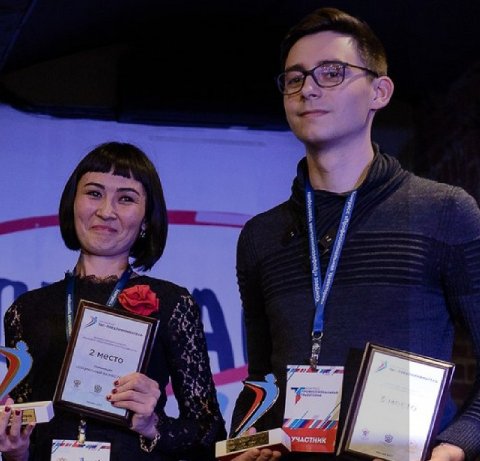
    The team from the School of Electrical Engineering and Computer Science, under the guidance of Mikhail Tsymbler, which included Aleksey Porozov and Yana Kraev, were chosen as the winners. Their algorithm used machine learning based on neural networks, and was the most accurate. The winners received a cup, certificate, and a check for 4000 euros from the SMS Group company.

    “This is a wonderful contest – we never solved such difficult tasks on this level. I was in doubt for a long time – is it even worth trying to do this? But thanks to the support of the leadership from the School of Electrical Engineering and Computer Science we decided to participate after all. We don’t know how to participate poorly – and that’s how we won,” said Mikhail Tsymbler.

    “We work on informational technologies, and the task was from the sphere of metallurgy. We consulted with specialists in metallurgy who helped us understand this area. We studied a lot of data on the rolling process offered by the contest organizers and understood how to teach artificial intellect to predict sticking of workpieces, and that’s how we solved this task,” shared Aleksey Porozov.

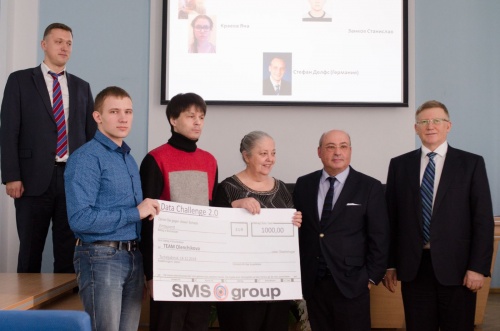
    Second place went to team from the Institute of Natural Sciences under the guidance of Tatiana Olenchikova, which included Nikita Semiklit and Stanislav Zankov. They were also awarded a certificate and a check for 1000 euros from SMS Groups.

    In addition, certificates from the SMS Group were awarded to all of the teams which participated in the contest.


  • SUSU Master’s Student a Prize Winner at the All-Russian Business Contest “Young Russian Businessperson 2017”

    SUSU Master’s Student a Prize Winner at the All-Russian Business Contest “Young Russian Businessperson 2017”

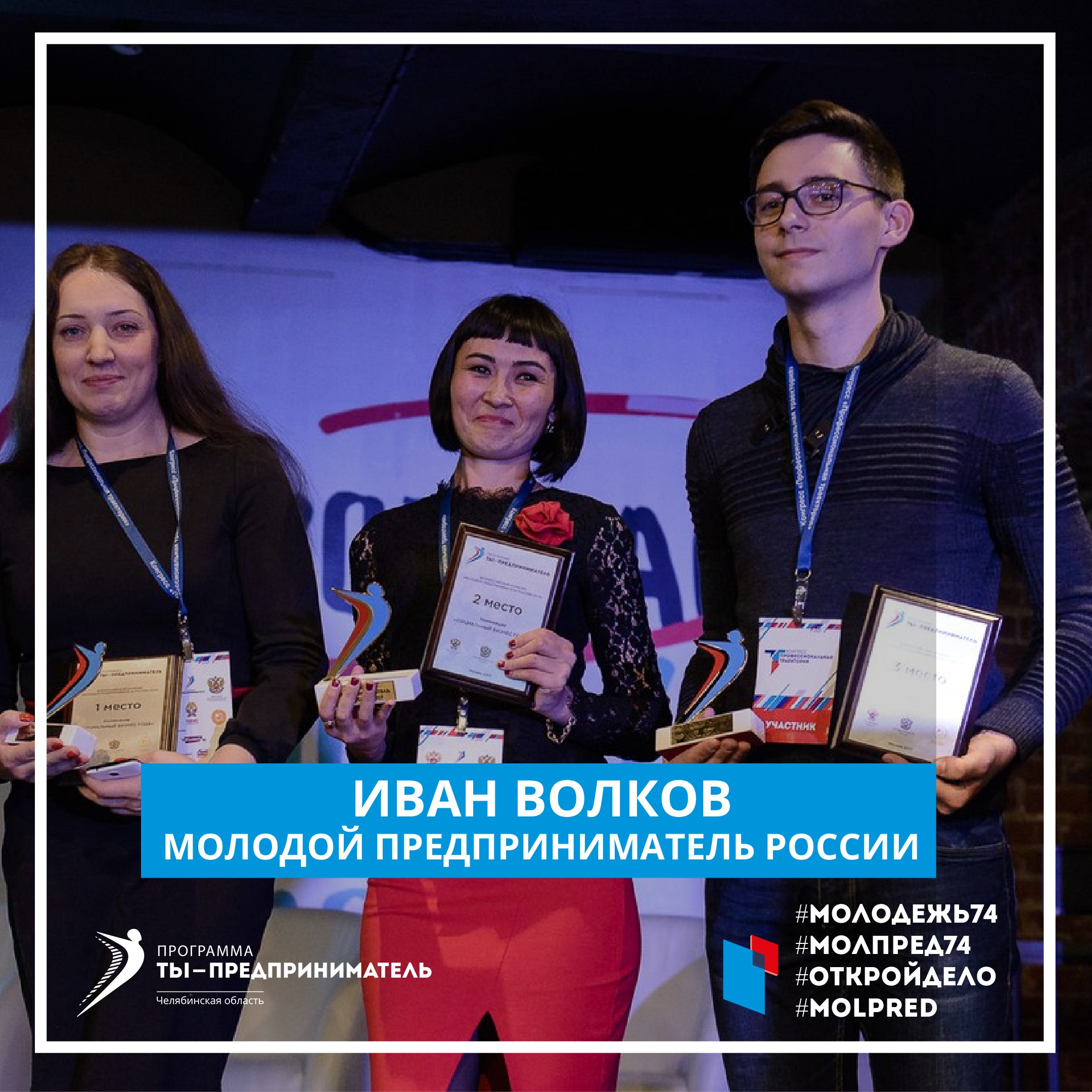
    Master’s Student of the School of Electronics and Computer Science Ivan Volkov took third place in a prestigious all-Russian business contest “Young Russian Businessperson 2017”!

    Ivan is the Head of MeteorIT company, which entered the market in 2017 with their DiaMeter application for people suffering from diabetes. The businessman proved that social projects can be profitable and, thanks to that, can be developed.

    In July 2017, Ivan presented his project under the Social Business category to the Contest Commission and won the regional stage. Among two thousand applications, the top fifty from all regions of Russia were chosen in this category. The final, national stage of the contest, at which Ivan spectacularly presented his project “DiaMeter: Your Diabetes Diary”, was held in Moscow on November 30th.

    By the decision of the jury he won a prize and returned to Chelyabinsk with a reward and recognition of the success of his business model at the national level.

    Ivan had the following to say about the plans on developing his project and company:

    “Participation in this contest gave me the chance to better form the meaning and goals of my project, gave me stimulus to develop, and gave me a lot of helpful knowledge, since besides the contest itself in Moscow I also participated in the Synergy business forum and at the congress of young businesspeople. We have huge plans for developing the application during the next year, including: functions for tracking diabetes, new capabilities for the users to communicate, integration with voice assistants, a web version, ability to send data online to your doctor and relatives, and collaboration with large companies who work in controlling diabetes.

    Besides the DiaMeter project, Meteor-it is working on developing mobile apps for businesses. At present we are already working with serious clients in Chelyabinsk, and we are planning on making our portfolio larger with new and interesting projects.”

  • Interview with Professor of University of Central Lancashire Janet Read

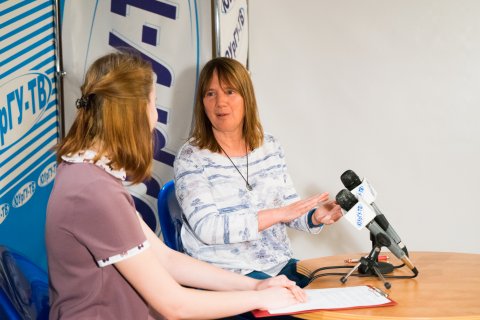
    Interview with Professor of University of Central Lancashire Janet Read

    Professor of University of Central Lancashire (UK) Janet Read visited SUSU. Janet Read is a Professor in Child Computer Interaction and is the Director of the Child Computer Interaction (ChiCI) research group at UCLan. Internationally known for her work on designing and evaluating technologies for children as well as for her work on text input with digital ink, Prof. Read manages research grants and research students, teaches research methods and advanced HCI and contributes to SET activities in local schools. She presented a course on the mathematical foundations of the user interface of software systems for SUSU students. We’ve talked about this course and her experience in Russia.

    – Last Friday you presented the course on the mathematical foundations of the user interface of software systems. What is the role of mathematics and statistics in designing the user interface?

    – Human computing interaction is a sphere where we look at how interfaces are designed in order to make them more useful for humans. Every time you go on your phone, you are texting, put data and so on, that all can be model mathematically. In terms of interface design, if we understand how data is transmitted, how each tiny little press is transmitted to the computer, how that then comes part of the message, we can build a better interface. The curious reality is that all interfaces are not very well designed. So, what are we going to talk about is how we might optimize that.

    – In the frameworks of the course, you are planning on covering a very interesting socially significant project connected with developing the user interface for interactions with children with certain limited capabilities. Please tell us about this project.

    – In my research group, we spend many years searching better design technologies for children. Children are really interesting because typically certain UK children can’t spell. Therefore, when they need to use text interfaces they find that quite hard, they would type things and they go wrong. We recently do the project with BBC, where they have us to look at how games are designed for children with special needs. They may have Down syndrome, they may have some physical conditions, some of the children have got difficulties with their hands, so they can’t easily select things, because they have some sort of shakes, for example. In our study, we go into people’s homes, talked to their children, talked to parents. We now try to think how to design better technology that they use, so they can play better with friends on these games, they can have better game experience, and also use it for communication. Because some of these children have no verbal communication, they need to use the computer to communicate.  It’s so nice to see or imagine what you can do for children in terms of computer interfaces because it can make difference to their lives.

    – Your university is among leaders in the employment of students in Britain. What is the cause of it?

    – In the UK, most students get jobs when they finish universities. If they do computer science degree they’ve got a good chance to get employed, because IT-industry is big, IT is everywhere. We have students doing networking courses, they’ve typically had jobs in public sector. Now we also have students who are working on software engineering, software programming, and they typically end up working in large project teams. When we teach them we make a point of teaching on communicating and talking to people, which is sometimes quite hard for computer science students.

    – You have already got acquainted with SUSU. What is your impression of our university?

    – It is my first time in Russia, and that’s really nice. I think I got what I expected. SUSU main building is absolutely gorgeous. And also, when you see a big student in front of it, you feel very inspired. We have a trip to see a supercomputer yesterday, we saw engineers and it was great too. I like the feel of the city. And I also feel like students here are very engaged. That’s really nice and I’m looking forward to teaching them.


    Ekaterina Kuznetsova, photo by Oleg Igoshin.
    Source: https://www.susu.ru/en/news/2017/05/30/im-looking-forward-teach-students-interview-professor-janet-read
  • We invite you to participate in a lecture and a seminar by professor Radu Prodan!

    We invite you to participate in a lecture and a seminar by professor Radu Prodan!

    We are glad to inform you, that professor Radu Prodan (Innsbruck University, Austria)  will pay a visit to the School of Electrical Engineering and Computer Science of South Ural State University from 18th to 21st of September, 2017.

    During his visit, prof. Prodan will present an open lecture on Multi-Objective Modelling and Optimization of Scientific and Industrial Applications on Distributed Computing Infrastructures. Also, EECS SUSU organizes a seminar on the topic «Distributed and Cloud Computing. Methods of Big Data processing«, where students, graduate students, and staff of EECS SUSU will provide reports on results of their current research activities in the field of DataMining, Cloud Computing, and Big Data processing. The lecture and the seminar would be hosted in English.

    Timetable

    • September 19th, from 11:30 to 13:00, room 112/3g. Seminar: «Distributed and Cloud Computing. Methods of Big Data processing«.
    • September 20th, from 11:30 to 13:00, room 434/3b. Open lecture: «Multi-Objective Modelling and Optimization of Scientific and Industrial Applications on Distributed Computing Infrastructures»

    We invite everyone who is interested in distributed and cloud computing to visit the lecture and the seminar. Bachelor, master and Ph. D. students, lecturers and professors of EECS, who wish to present their work on the seminar (September 19th) are invited to send the topic of their report and a presentation draft (10-12 slides) until 12:00 on September 13, 2017, to the e-mail: zhernovavm@susu.ru