University applicants, who intend to work at international corporations in the sphere of automation and information technology, are getting enrolled to the leading higher education institution of the country.
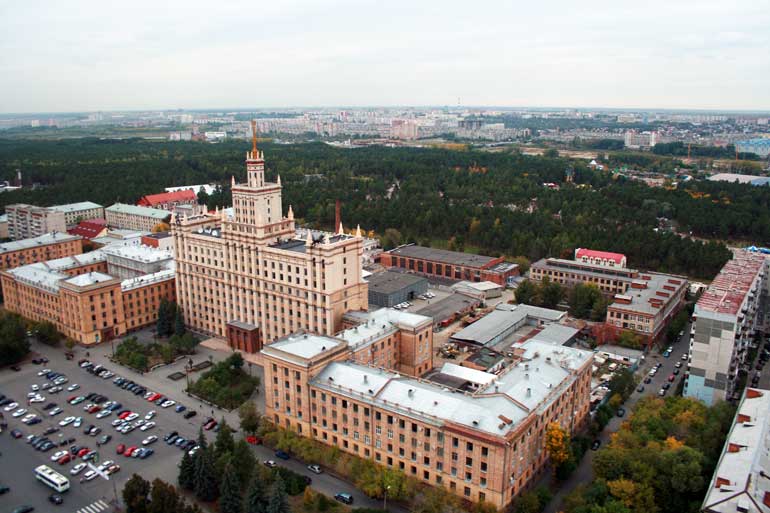
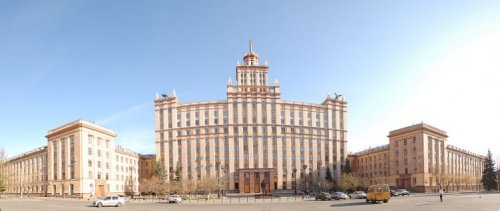
Today, South Ural State University’s School of Electrical Engineering and Computer Science maintains traditions of classical engineering education, while being oriented at creation of elite environment for training of high-level scientists and engineers. The School performs training of cadre for a wide range of in-demand professions connected with instrument engineering, radio electronics, automation, information security, computer science and software engineering. Developing autopilot systems, inventing wireless sensors, implementing smart manufacturing technologies, analysing terabytes of data and revealing its hidden patterns, protecting information in the world of the Internet of Things – all of this are the tasks being completed by students of SUSU’s School of Electrical Engineering and Computer Science (EECS).
Alumni of the School don’t need to worry about searching for a well-paid job. Aside from a degree acknowledged at the international labour market, young specialists also get a considerable portfolio and a valuable experience of solving specific problems. Alumni choose such leading companies as Emerson, Yandex, Google, Microsoft, Kaspersky Lab, Sberbank, and Huawei. Director of the SUSU School of Electrical Engineering and Computer Science, Gleb Radchenko, told us about employment of SUSU alumni, about specificities of the educational process, and about projects which SUSU students are working on.
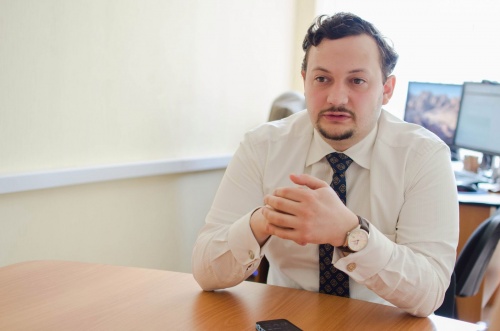
— Mr. Radchenko, what is new in admissions campaign 2019 for SUSU EECS?
— The concept of working with South Ural State University applicants has principally changed over the last year. The university has chosen a number of study spheres acting as the strategy vector of the university’s development, which are closely connected with EECS. They are the sphere of digital economy, the Industry 4.0, and the sphere of artificial intelligence. Nowadays, problems connected with switching of various industrial branches to a new technological pattern become of top priority, as production, quality and cost of goods is getting more and more influenced by automation and technologies of the Internet of Things and smart sensor systems, which transmit data to be analysed in intelligent computing systems. Leading Russian industrial enterprises have got actively engaged into this process. Our alumni also work closely on problems in the sphere of Industry 4.0.
Last year, the largest-in-Russia international conference regarding Industry 4.0 issues was organised at SUSU. The conference was opened by President of transnational company called Emerson, Michael Train, and plenary and section reports were delivered by representatives of universities and companies from all around the world: USA, Poland, Germany, China, Portugal and Italy. Right now, based on the international experience, we are working on a whole set of problems connected with digital industry, including such areas as cloud computing, technologies of industrial Internet of Things, technologies of information protection, methods of data mining, and machine learning.
— At what extent are students engaged in the work on these projects?
— Students are executors in all research projects of EECS. Starting from the 2nd and the 3rd years of Bachelor’s study and till the very graduation, students participate in projects, carry out research, and learn analysing the existing problems and offering their own solutions for given problems. School of Electrical Engineering and Computer Science fits harmoniously into the perspective educational concept, because majors taught in the EECS cover practically the entire range of problems of Industry 4.0.
— What majors are they?
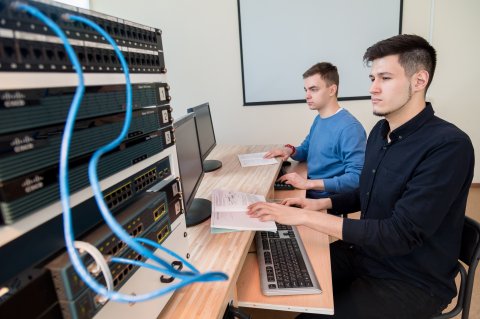
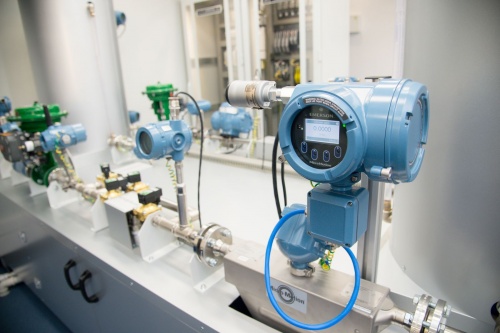
— One of the blocks includes majors in the sphere of automation and sensor systems taught at the Department of Information-Measuring Equipment, the Department of Automation and Control, and the Department of Automatic Control Systems. The Departments interact with leading international companies. For example, Emerson company has opened its second laboratory at the Department of Information-Measuring Equipment within its cooperation with the university. Emerson’s Competency Centre has the most advanced equipment. The Centre is equipped with unique technologies, including predictive control systems based on neural network methods, which has only started being implemented in the industry.
There is the Laboratory of Endress+Hauser Swiss Company operating at the Department of Automation and Control under supervision of Lev Kazarinov. In this Laboratory, students explore methods of resource- and energy-saving, and automation of problems of power engineering distribution: they learn how to obtain data for their further processing, how to control systems on the basis of obtained information, how to construct an architecture of such hardware and software systems in order to solve problems regarding optimization of energy resources’ consumption, and how to arrange industrial Internet of Things. Unique systems of industrial Internet of Things get created at laboratories of the Department. For example, autonomous temperature sensors and the system that acquires data regarding the temperature regime, invented at the department, allow obtaining information about the quality of heating in classrooms all around the university.
— Why do such large corporations like Emerson invest into students of EECS?
— Emerson is a strategic partner of the university and the EECS. President of the Company is the Head of our International Scientific Council. The largest, by Russian standards, engineering centre aka Emerson needs well-trained cadre. In Chelyabinsk, the Company has launched a unique plant which produces measuring systems and industrial automation systems; this plant is the pure, hi-tech manufacturing. Moreover, having established the plant five years ago, today Emerson has doubled its territory. The company is in desperate need of engineers, specialists in the sphere of automation and network technologies, and specialists in the sphere of supercomputer simulation. In this direction, Emerson actively interacts with SUSU because SUSU is its key supplier of cadre. Moreover, Emerson can communicate with leading researchers from around the world through our university. For example, a unique laboratory for simulation of measuring systems and self-monitoring of measuring devices was opened at EECS two years ago.
— What’s the purpose of its operation?
— I can explain by an example. Let’s say, your company is equipped with a sensor which shows that the temperature is 18 degrees. How do we know if the temperature is correct? How do we know if the sensor is working? We could put the second sensor next to the first one. Let’s say, one of them shows 18 degrees and the other one shows 25 degrees. But which one of them is correct? Answering this question is very hard. Determining correctness of measured data is a very serious mathematical task. All right, let’s say you have 10 similar sensors, and you can go and check manually which of them are working correctly and which of them are not. But this is a very time-consuming operation, don’t you think? In the modern world, the world of the Internet of Things, big plants are equipped with hundreds and thousands of various sensors that display various parameters. We are unable to check whether all of them are working correctly. It is important that we could simultaneously work with data regarding the temperature and liquid consumption, and above all receive data about correctness of this information, so that the sensor informed us that the temperature is 25 degrees with authenticity of 95%. SUSU scientists are working in this direction. There are researches carried out in the Laboratory of Self-Validating Sensors, Systems, and Advanced Instrumentation, supervised by an Oxford University Professor, Manus Henry. It is nowadays that articles on the research results get published in high-ranked scientific journals of the first quartile.
— What is the novelty level of you know-how? Where and how can your inventions be applied?
— Right now, the work is at the stage of research and development, which subsequently is going to pass the stage of introduction. This is not some theoretical problem detached from reality. At the moment, you won’t find any sensors which would inform you of both the value of a parameter and the limits of data authenticity. Even if you find them, they will be incredibly expensive. The team of researchers from EECS is creating a new product, so that enterprises of Industry 4.0 could introduce such a brand-new approach and enhance efficiency of their production processes.
— What other projects are EECS students working on together with scientists?
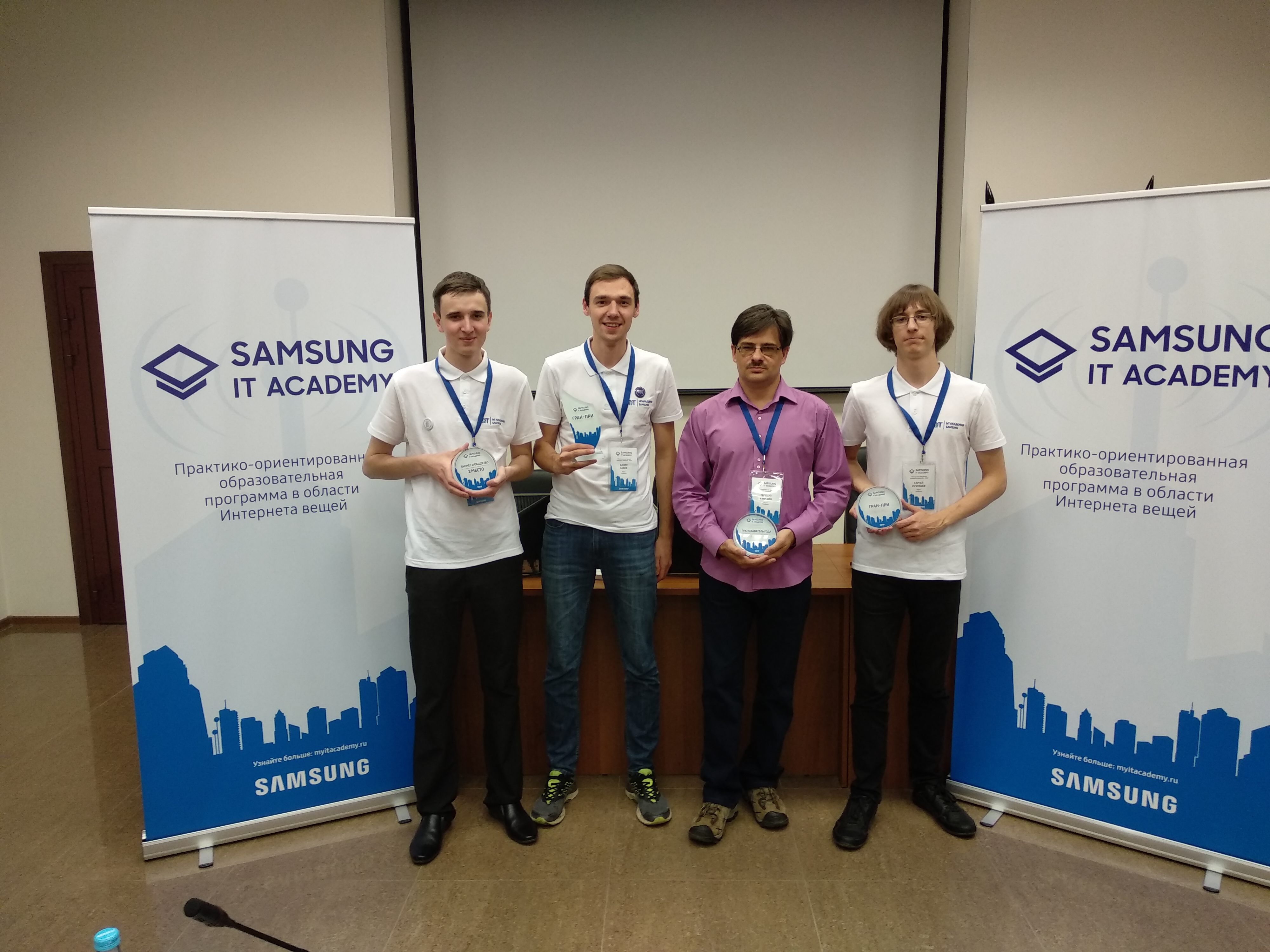
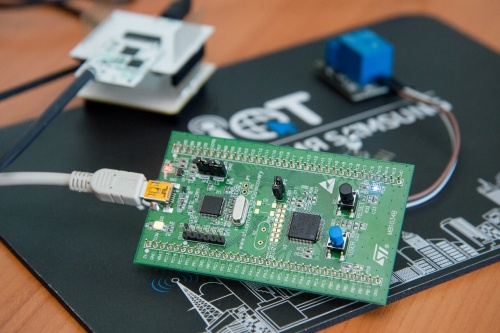
— Automation is just a small part of work being done at EECS. The next block of problems is data analysis. Let’s say we’ve received measurement data. As we remember, we have thousands of sensors that send us these data every 10 milliseconds. Where are we going to store these data? How do we analyse them? What conclusions can we make out of the obtained information? These problems are the sphere of expertise of specialists at the School of Electrical Engineering and Computer Science’s Department of System Programming, Department of Electronic Computing Machines, Department of Computational Mathematics and High-Performance Computing, and Department of Information and Analytical Maintenance of Management in Social and Economic Systems. These are the problems of data mining which allow making conclusions out of big volumes of information; this includes machine learning and artificial intelligence; this includes the problems regarding development of applications which end users of such systems will be working with. Students majoring in this sphere work on design and development of software systems, create web applications and mobile applications, and use supercomputer technologies for solving various applied problems. Students learn from experience of the world’s leading IT companies. For example, EECS students can study technologies of the Internet of Things within Samsung IoT Academy. Supercomputer technologies are studied on the basis of resources provided by the SUSU Supercomputer Simulation Laboratory, which possesses one of the most powerful supercomputers in Russia.
— What do the Department of Design and Production of Radio Apparatus and the Department of Information Communication Technology deal with?
— This is the third block of the tasks related to data transmission, that is the field of radio electronics. Our specialists from the Department of Information Communication Technology are studying new standards of internetworking, the so called 5G standards. The School of Electronic Engineering and Computer Science works with school pupils in this field. We hold very interesting seminars and project sessions for senior pupils: we look at how satellite navigation systems such as GLONASS and GPS are functioning, demonstrate how to get a signal from a satellite, where they are located, and analyse the packages of data received from the satellites. This field’s graduates successfully find jobs in the leading telecom-companies in Russia, such as MTS, Megafon, or Rostelecom.
At the Department of Design and Production of Radio Apparatus, the School’s students are working on such tasks as the creation of new types of antennae. The Department’s specialists have engineered the systems for automatic aircraft landing in an airport in the conditions of high snow cover. It’s especially relevant in Russia. Classical systems, when detecting an increase in the snow cover thickness, stop working correctly, and there appear difficulties for an aircraft in the mode of automatic landing. A unique antenna was developed, which allows to remove all these disadvantages of classical antennae. And it will help to properly land an aircraft on a landing strip in an extreme situation even in case of very high snow cover.
— Is someone using these innovations already?
— Our specialists are closely working with our region’s businesses. Thus, the project on engineering the landing system was fulfilled in close collaboration with Radio Plant Polet. Currently our students are getting ready to work on other tasks of the new generation in the field of aviation, radio positioning and radio landing.
— Our students are working on such an important issue as information security. Intruding into private informational space and Internet threats to industrial facilities are a serious world problem. What results have you managed to obtain in this field?
— Today, when we’re talking about the Internet of Things, the information security becomes incredibly relevant. Just one year ago, there was an incident in the USA with baby monitors, which record everything that’s going on in a child’s room and, like mobile phones, allow to get the feedback with the child. It’s turned out that the baby monitors’ manufacturer created a primitive default password, which the customers never tried changing. So, the hooligans hacked the baby monitors, connected to those in the middle of the night, and scared the children by speaking to them in a creepy voice. This is the example of the security problems in the Internet of Things.
Today we have a lot of things around that are connected to a network: printers, smart vacuum cleaners, baby monitors, CCTV systems, doorbells, and house intercoms. You may have a gas, water or electricity meter, which sends readings to your cell phone — this is called smart house. You can receive data on your mobile phone of be in control of the situation. But if this infrastructure has poor protection, a hacker can take a look into your apartment via your web-camera and see what’s happening there.
— Information protection in the world of the Internet of Things is an important aspect. Another field, which your students have succeeded in, is the information protection in industrial systems. What projects are being fulfilled in this sphere?
— Information protection in industrial systems is the main field of work of the Department of Information Security. Here we are talking about both enterprises and autonomous facilities, and the very same autopilots as well. Obviously, online monitoring and process control are very convenient. I can take my phone and see what parameters this or that unit or facility has at the moment. But on the other hand, this convenience brings along danger. If a malefactor wants s/he can organize a specialized attack on such a facility and knock it out of service. The specialists of the Department of Information Security know how to adjust the security system at an enterprise, reveal the sources of potential threats, and focus on protection against such threats. For that purpose a research and education centre was opened at the School of Electronic Engineering and Computer Science, which was launched jointly with Kaspersky Laboratory company.
— So, the educational process is not just mere theoretical studies, but also project work and solving of the global problems of the world community?
— Project work is an important component of the educational process. Thus, within Master’s programmes of the School of Electronic Engineering and Computer Science separate projects were launched, which aim at solving certain tasks, and for specifically for which students are recruited. While performing their work, students understand that when they complete their Master’s studies, they will have an experience in fulfilling an interdisciplinary project in the field of information technologies. Besides such a project, it is also a scientific development with the use of artificial intelligence – technologies of neural networks for detecting of metal sticking at a metallurgy production. Already today students are successfully fulfilling this project while taking the internship at an SMS Group enterprise in Germany. Once they complete their Master’s studies, they will have a unique portfolio and job offers from the world’s leading companies. This is a whole new level of a specialist with totally new possibilities to get a much higher salary and a much better job placement.
— Does the School of Electronic Engineering and Computer Science collaborate with other big universities in our country and around the world?
— I’m sure that the major and most interesting projects result namely from collaboration. We have brilliant joint projects with different universities. One of such long-term projects in the field of program engineering has wrapped up just this March. It was being fulfilled by Ural Federal University, St. Petersburg Polytechnic University, St Petersburg University, and also by about a dozen universities in Germany, United Kingdom, Denmark, Finland, and Jordan.
— Why do applicant choose to enrol namely with the SUSU School of Electronic Engineering and Computer Science?
— Today there’s a different approach to education than before. Every big university under Project 5-100, and SUSU is the participant of Project 5-100, has its own specifics and its own unique experience. If I wanted to deal with computer sciences in the field of Industry 4.0, the tasks of the Internet of Things, including the Industrial Internet of Things, the tasks of artificial intelligence, of the technology of digital twins of industrial facilities, I would have enrolled namely with SUSU, and it doesn’t matter where I live: in Chelyabinsk, Kazan, or Yekaterinburg. This university has unique experience, equipment and academics, as well as contacts with the leading universities from abroad and professors from around the world, and close collaboration with the businesses in our region. Our specifics allows us to state that we feel that the work that we do is of the international level.
— At what age should one start thinking about his or her future career?
— School children are always limited in time for deciding on that as already by the middle of the 11th grade they have to make up their mind on what they want to become in life. At the School of Electronic Engineering and Computer Science we organize schools for pupils of the 8th to 9th grades in order to demonstrate to them which tasks, besides computer sciences and programming, they will be able to address if they enrol with us. We share with them about such fields as industry automation, and we explain where they can find very good jobs related to this sphere. Our Bachelor’s students who go to work in Emerson have an opportunity to take internships all over the world, they do very interesting jobs and deal the tasks in automation. If we take the information technologies and radio electronics, our graduates work in such companies as Huawei, Google, Microsoft, Unity, and Rakuten, which is the designer of Viber. We demonstrate practical aspects for the school pupils and talk to them about the possible fields of work.
Six months ago a Quantorium opened at SUSU. This is unique place for training for students where they can master the systems of UAV operating, robotics, and industrial design. Within Quantorium we launched a pilot project on developing an automated system for mining for mineral resources on asteroids. This is a task the solving of which requires a very broad range of knowledge. Children engineer an automated platform which can automatically take soil samples and analyse them.
— So, this means that your graduates can easily find jobs thanks to big scope of the obtained knowledge, experience and practical skills?
— There’s a slightly different problem that the graduates of the School of Electronic Engineering and Computer Science face. Today the businesses around the world have a dramatic lack of staff trained in the fields being taught at the School of Electronic Engineering and Computer Science. This leads to the fact that our students already start working while still in their third year of studies. Engineering companies invite them to take internships, so they become interns and designers. They have to combine their studies and work, and it’s always not that easy. But it’s a fact that there’s a great demand for our graduates.
Every year we organize job fairs where we introduce our students to potential employers. There are also many federal companies among the potential employers. The issue before our students now is not how to find a job, but how to choose from the available variants the one that will be most beneficial and promising.
— The companies of what most popular spheres are looking forward to hiring your young specialists?
— The financial sector, designing of computer games and mobile applications, industry, measurement systems, and radio electronics. The range of fields in which are alumni are working is very wide. I couldn’t name a single sector which could not make use of our specialists. Anywhere, where there are information technologies, or there is a need for automation, our specialists can work or are working already.